Wednesday, June 11, 2014

A Story about Mowing


I was mowing the grass and a neighbor came up to me with his dog. We've met once before. He gave me a tip about the mulch I was putting down. 

This time he asked how I was doing, and I said okay. 

He mentioned Roanoke and started telling me about how it was when he lived there, his ex-wife, the 5 cats he had in the house, what their names were, how he got divorced and moved to Danville, lived single for years and then remarried, liked Roanoke but didn't much care for Danville. I listened and nodded. He didn't seem to want a lot of feedback, so I just listened. Nice guy, a polite dog. 

But the dog finally started leaning on his leash, and the fellow and the dog moved on. We never exchanged names, maybe next time.

Saturday, June 07, 2014

Poetry I Really Really Like: A MANIFESTO by John Guzlowski


Let me first say that there are poets and poems I really really like.

Here's a short list of poets who immediately and without prompting come to mind:

Whitman, Robert Lowell, Emily Dickinson, Randall Jarrell, Robert Frost, Ai, Wisława Szymborska, Homer, Francois Villon, Tadeusz Rozewicz, Elizabeth Bishop, Milosz, Zbigniew Herbert (we share a first name!), Auden, T. S. Eliot, Sylvia Plath, Karl Shapiro, Philip Levine, Sharon Olds, Allen Ginsberg, Eavan Boland, Donald Hall, and Edna St. Vincent Millay.

Most of the poets on the list are dead, and the ones that aren't are getting along.

I'm not sure what that means except maybe it takes a while to figure out who you really like and who you really don't like. Poets and poems grow on you, or maybe you grow into them.

I've got an essay online about my relationship to the poetry of Emily Dickinson that talks about that. When I was a student I thought that what she was trying to tell me through her poems was pretty miserable, useless. I said, in fact, "They should feed this stuff [her poems] to the cows." I don't feel that way about her anymore. In fact, she's in the list above. Here's the link that will take you to my essay about what changed my mind. It's listed under essays in the menu on the left of the screen that will come up. Also, there's a poem there called "Midnight" about what I thought about her when I was a student.  Just click here and you'll go straight to that essay.  

I've been thinking about and reading the poets in the above list for a while and I can say without equivocation that I really really like them.

I think that one of the other things my list of poets says about my taste in poetry is that I like serious poets, poets who tend to take a more or less gloomy view of things, see the dark side, the Darth Vader side of things.

So what's Whitman doing on the list?

Well, he's got that dark side too. It's there with his sunny side. He's a man who knows about the blues. You get this in a lot of his poems, but one I like a lot is one that's not read much. It's buried in the half a thousand pages that make up the later editions of Leaves of Grass. It's a poem called "This Compost." In it, Whitman talks about the wind that rises from the "sour dead" and licks his naked skin.

Yeah, Whitman has his gloomy side.

I like poets who talk about everyday things too, tools and hammers, car parts, branches and limbs of trees, the way a head turns when a person feels too much sun on the back of his neck.

I teach poetry writing, and I'm always telling students to make sure that their poems have everyday things in them, things like hands and arms, feet and lips in them. I like poems that are crisp in that way. John Milton didn't make my list, but he was a guy who knew something about feet. You read Paradise Lost, and you hear him talk over and over about the sound feet make when they step on grass or what it's like to step on something you're not used to stepping on.

Someone asked me recently how I know what is good poetry and what isn't. There is the long story of what is good and the short story of what is good. The long story involves criteria and personal biography, the short story involves a simple statement. I'll give you the short story. What I feel is "good" is what touches me. All of the poets I mentioned above touched me. And that's why I read them and continue to read them.

This is getting too long so I'll just mention one other thing about the poets I like. I don't know if all of them are like this, but enough of them are so I'll mention it here. They write long sentences. I like the rhythm that you get when a sentence goes on and on and on, and you don't know when it will end but you're sure it will, and you're sure also that when you do get to the ending you'll feel exhausted but happy.

Whitman writes sentences like that, and Frost and Ai do too. Not always but enough of the time.

I'm sure that there are other things that make me like the poems I like (a sense of a personal "I" is one), but I think I'll save that for some other time.

Obama Chews Gum on 70th Anniversary of D-Day


Obama Chews Gum on D-Day: Apparently, Obama was chewing gum at the ceremony commemorating the 70 th anniversary. I don't have a problem with this. I figure he was trying to show his solidarity with the GIs who crossed over the channel. They were scared as shit and chewing gum as fast as they could chew.
On a serious note, I asked my wife's dad, a guy who was on the only American ship sunk on d-day, what he thought about Obama chewing gum. Her dad said, he's got a right.


Monday, May 19, 2014

Heart Attack Update--2014

It's been four years since my heart trouble and my open heart surgery.  I'm feeling pretty good.  I'm getting around, traveling, eating way too much, gambling when I can, drinking wine every night, and writing.  This last weekend Linda, Lillian, Lulu, and I hung out in Raleigh-Durham, swimming, visiting museums, and eating way too much great Italian food.  I couldn't have done any of that if the heart trouble had gone the wrong way.  And I'm thankful it didn't.

This morning I went back and re-read the the half-a-dozen blog posts I did about my heart attack.  It was scary reading.

Here's the first one I wrote, the one about what triggered all the problems I had with my heart that spring.


“This is not a Death Certificate”

That’s what it said at the top of the Guest Removal Form I was filling out in the infirmary of the cruise ship the Independence of the Sea. The nurse gave me the sheet and asked me to sign it. I was about to when I suddenly saw that statement about how the form wasn’t a Death Certificate. That gave me pause.

I started reading through the form more carefully at that point. On the first side, there wasn’t much that you wouldn’t expect. The infirmary and the cruise line wanted my name and address and such, and I was prepared to fill that in. I had agreed to leave the ship to see a cardiologist in Lisbon, and that was the kind of information I knew the cruise line would need.

I needed to see a cardiologist because just the day before, after walking on the ship's jogging track for about 30 minutes, something weird happened. When I got down to my cabin to take a shower, I suddenly started sweating. I didn't know where that was coming from. The walking I did on the jogging track was pretty mild, and I hadn’t been sweating earlier when I was walking on the track. There was a pretty strong wind the ship was moving into and it whisked the sweat off me. Plus I was wearing my new micro-fiber hat and t-shirt and shorts and they all promised me that if I bought them I wouldn’t sweat and if I did I wouldn’t feel it.

But there I was in my cabin sweating.

I was waiting for Linda to get back from the fitness center, and I knew I had to stop sweating before she got back and we went off for breakfast. So I figured I would walk onto the balcony and cool off. It was always cool there, getting plenty of that wind that the ship was heading into, and I stepped outside and tried to dry myself off, but I just started sweating more and more, and I realized I was having trouble breathing so I sat down, but that just made my breathing harder and the sweat pour out of me faster.

Then I went into the shower and turned on the cold water, but that didn’t do any good. I was still sweating like an Arkansas hog.

I’d been sweating and having trouble breathing for ten minutes, and suddenly I noticed that my heart was beating at a clip. I jumped out of the shower and grabbed my wristwatch and tried to time my pulse.

But I couldn’t keep track of the beats because I couldn’t count that fast.

Listen, you know you’re in trouble when you can’t time your pulse because the beats are coming too fast. As soon as you try to count 100 beats, you know you're missing dozens of other beats. Nobody can count that fast.

I knew I couldn’t get to the infirmary on the first deck without Linda, so I sat down naked in the middle of our cabin and waited.

Thank God, she didn’t stop to gamble in the casino.

She saw me there sitting on the chair, sweating, naked, and she said, “What’s wrong.”

I said, “I think I’m sick.”

She called the infirmary and told them we were coming down.

I threw on my t-shirt and shorts and started walking down the corridor to the elevators. Linda said, “You don’t have your shoes.”

I didn’t go back to get them. I just kept walking.

We got to the infirmary and the place was packed, but the nurse looked at me and told me to sit down and took my pulse and then helped me to the emergency room. The doctor came in, and she took my pulse too and couldn’t believe it.

It was 207.


They gave me a shot of something to regulate my heart because it was – according to the doctor who was making these motions with her hand – contracting like a crazy octopus when it should be contracting like a languid jellyfish.

The injection was amazing. As soon as the doctor shot it in my vein, she asked me how I felt, and I paused my shaking and beating and sweating to see how I felt, and it was like I could feel whatever it was that she gave me moving through my body like a slow stream, up from the vein in my arm, across my chest to my heart and up my shoulder, and up and over my neck to my lips and eyes and brain. A slow steady rising stream of ease that calmed down all that bounding my heart was doing.

After that, for the next 6 hours they ran tests and had me resting between them, and what they found was that I had had a cardiac arrhythmia with an atrial fibrillation and elevated levels of cardiac enzymes.

After the tests, they told me that I had had a heart attack and that I should definitely see a cardiologist at the next port, Lisbon.

As you can imagine, I thought that was a good idea, and the next morning, Linda and I were in the infirmary, and I was filling out the necessary paperwork for leaving the ship so I could see the cardiologist.

That’s when I was stopped by that phrase “This is not a Death Certificate” on the top of the page, and I started to read the form carefully.

The second page made it clear that if I filled out the form and left the ship it was possible that I might never be able to get back on it. The cardiologist in Lisbon could declare me unfit to travel if he thought I was too weak. In which case, I was stuck in Lisbon.

I didn’t want to be stuck in Lisbon, and I didn’t want to hassle with the rigmarole of trying to find a way out of Lisbon when most of the flights in Europe had been cancelled because of that volcano erupting in Iceland, and ultimately I didn’t want to die in Lisbon.

For that matter, I didn’t want to die anywhere. Death was not something I wanted to be seeing in my future. Three of my friends had died in the previous month, and I didn’t want to die. I had this crazy idea that if I could stay on the cruise ship I would be healthy and swell and the atrial fibrillations would never come back.

I figured that not filling out the form that said “This is not a Death Certificate” and not leaving the ship to see the cardiologist was the best way to go, and I told the nurse that. She was a very nice person, from the Philippines, and had been with me throughout my tests, and when I told her that I wasn’t going to see the cardiologist she said in her Spanish accent, “You must see the cardiologist. I know how you were when you came in. It was bad. You weren’t like this, standing and breathing like a living man. I see you now and you think you are better, but when I saw you then you were very bad, and I feel you still are.”

I said, “I don’t want to leave the ship.”

“I can’t tell you what do to, but if I were you and had been that sick, I would leave this ship, see the cardiologist.”

I said it again. “I don’t want to leave the ship.”

She said, “I see.”

I smiled and shook her hand and said, “I hope I don’t see you again.”

She shook her head and said, “And so do I.”


___________

PS--Linda took all three photos. The last two are of sculptures in Vigo, Spain, two days after my heart attack.

In the last one, I'm sitting next to a statue of one of my boyhood idols Jules Verne.
Like me, he visited Vigo once.

PPS--I'm seeing my doctor tomorrow and the cardiologist on Thursday.

Tuesday, March 18, 2014

A Great Irish Poem


The Irish like the Poles are great poets.  
 
Maybe it's the years of oppression, the centuries of bad luck, the presence of a strong Catholicism, the yearning for peace, love, freedom. 
 
Whatever it is, the Irish write some great poems.  Here's one of my favorites, by Eavan Boland.  

Quarantine

In the worst hour of the worst season
of the worst year of a whole people
a man set out from the workhouse with his wife.
He was walking--they were both walking--north.

She was sick with famine fever and could not keep up.
He lifted her and put her on his back.
He walked like that west and north.
Until at nightfall under freezing stars they arrived.

In the morning they were both found dead.
Of cold. Of hunger. Of the toxins of a whole history.
But her feet were held against his breastbone.
The last heat of his flesh was his last gift to her.

Let no love poem ever come to this threshold.
There is no place here for the inexact
praise of the easy graces and sensuality of the body.
There is only time for this merciless inventory:

Their death together in the winter of 1847.
Also what they suffered. How they lived.
And what there is between a man and a woman.
And in which darkness it can best be proved.

~ Eavan Boland
 
_______________________

Monday, March 17, 2014

Presumption Dept

I just wrote to Joyce Carol Oates asking her is she would write a blurb for my forthcoming novel Road of Bones (Cervena Barva Press), about two German lovers separated by World War II.

I'll let you know if I hear from her.

(ps--did I ever tell you about the time I received a nasty postcard from Isaac Asimov, complaining about a review I wrote of one of his 2000 books?  I still have it around here somewhere.  Signed in fact.  I wonder if I could sell it on ebay?)

_________________________
If you want to read a chapter from the book, here's a link:  The German

Wednesday, January 22, 2014

University of Oklahoma Shooting

  Possible shooting at the University of Oklahoma campus.  

This is the 4th or 5th school shooting this year.  

It's hard to keep track.

On Monday night, a student was shot and critically wounded outside an athletic center at Widener University in Chester, PA.  Last week, two students were shot at a high school in Philly, another was shot at a high school in Albany, NY.  Two students were shot at a middle school in New Mexico.
Yesterday, a student was killed by another student at Purdue. 

But maybe these shootings don't count because they aren't mass murders. You need at least 4 dead for a mass murder.  They're also not sure if anyone was shot in this recent shooting.  

So it's hard to get a handle on the stats.

Anyway.

Thursday, December 12, 2013

The Greatest American Novel?


The Greatest American Novel? 

I'm not sure what it is. I've read most of the books that people would put up for that title, and I've read a lot of novels no one would put up for that title. I've been a reader all my life and have read pretty much everything from Henry James' Ambassadors to Ernie Kovacs Zoomar, but I hate making statements about how this is the best record or the best movie or the best waffle iron.

Different people look for different things in a novel, and my greatest is not necessarily your greatest. I think I saw this earlier this week and then invited people to send me their lists. What we saw I think is that although there was some overlap, most people's lists were pretty much shaped to their needs, loves, questions. I know mine was.

But what if I were pressed to list the greatest American novel, told that if I didn't answer immediately I'd have all the books I love taken away from me, the whole personal library amassed over 50 years of reading?

I guess if that happened, I would probably have to say Moby Dick. Or maybe Henry James' Portrait of a Lady, but only chapters 42 and 44. Or maybe John Dos Passos's USA Trilogy, but only the non-narrative chapters. 


Anyway, here's an article about 9 literary critics disagreeing about which is the greatest American novel.  Just click here and let me know what you think.

Wednesday, December 11, 2013

Dear Diary

Miguel Vallinas: http://www.miguelvallinas.com/fotografo/ 

I did my syllabus for next semeter's war stories class, sent out some poems (all about animals to a journal looking for animal/human interface poems) and then worked on translating Henryk Cierniak's wild and surreal poems. I think it's time to watch sesame street and drink some red wine.

PS--here's the link to the animal journal:  Animal: A Beast of a Literary Magazine.  

PPS--here's the cover of Henryk's book:


The book's available at Warsaw Publishing.  Click here. 

Tuesday, November 26, 2013

Thanksgiving Day Poem


Thanksgiving Day Poem


My people were all poor people,

the ones who survived to look

in my eyes and touch my fingers

and those who didn’t, dying instead


of fever, hunger, or even a bullet

in the face, dying maybe thinking

of how their deaths were balanced

by my birth or one of the other


stories the poor tell themselves

to give themselves the strength

to crawl out of their own graves.


Not all of them had this strength

but enough did, so that I’m here

and you’re here reading this poem

about them.  What kept them going?


Maybe something in the souls

of people who start with nothing

and end with nothing, and in between

live from one handful of nothing

to the next handful of nothing.


They keep going--through the terror

in the snow and the misery

in the rain--till some guy pierces

their stomachs with a bayonet


or some sickness grips them, and still

they keep going, even when there

aren’t any rungs on the ladder

even when there aren’t any ladders.

Sunday, November 24, 2013

The Day Kennedy was Shot


What were you doing the day Kennedy was shot?

I was a student in a sophomore high school geometry class.

The teacher read the message about Kennedy being shot and said, "That will teach him to ride in convertibles."
He laughed but no one else did.

Minutes later, school was cancelled.

I took the city bus home, the same way I did all the time.

It was a gray cold Chicago day, and felt more like December than November. There were snow flurries falling. I loved Kennedy and kept thinking they must have the news wrong.

When I finally got home, there was nobody there. My mom and dad were working and wouldn't be home for 3 or 4 hours. My sister was probably with her friends. 

I turned on the tv. Watched the news.

I didn't know what else to do.

Monday, November 18, 2013

Tornado Poem


Tornado Country.

We lived in the midwest for a long time, the flat country between the Mississippi and the Ohio River. We lived in Charleston and Normal and Peoria, Illinois, and we lived in Lafayette and West Lafayette, Indiana. We lived through four tornados and I don't know how many more tornado alerts. One time we hadn't finished doing the paper work on the damage one tornado did to our house when a second tornado hit us.

Here's a poem I wrote about a tornado that hit us when we were living in Charleston, Il.

My Daughter is Outside Playing

In the quiet space of the dining room
My wife and I lay out the place settings

The forks beside the Wedgwood plates
The spoons and knives in their places.

A napkin in her hand, she pauses
And tells me again of how her mother

Would starch and iron the squares of cotton
Wash the plates by hand and again by machine.

I smile, nod my head and turn to the window
See the roof next door lift, shingles

Exploding like scattered sparrows, and there
It is—the howl of the locomotive wind

And then a pounding at the glass door
And a screaming that will not stop.

__________________
The photo is from the New York Times.

The poem was picked up by New Verse News, a literary journal that focuses on poems about the news. Here's a link to it.  Click here.

Thursday, November 14, 2013

Old Jokes


I love old jokes. They're the people's true poetry, and remember, the older the joke, the sweeter the whine.  

Here are some of my favorites. 

A horse walks into a bar. The bartender says, "Hey, why the long face?"

A man walks into a bar carrying a chunk of asphalt in his hands. He gets the bartender's attention and says, "I'll have a beer and another for the road."

A guy walks into a bar carrying jumper cables. The bartender says, "You can have a drink, buddy, but you better not start anything!"

Wednesday, October 23, 2013

Falling Asleep: A poem


Falling Asleep


the dead 
are breathing 

somewhere else 

you can hear it
in the night
when your body
gathers itself
into sleep
and your breath
becomes all
that’s left
of you

listen

Friday, October 18, 2013

Corpse Poem


I posted the following poem recently in a thread about yoga that I shared on my Facebook page. 

The poem is called "Corpse Poem" after the yoga corpse pose (shavasana), a pose that often is the last in a series of yoga poses. In this pose you spread your legs and arms, close your eyes, and try to sink into yourself. The corpse pose is half relaxation, half meditation, half transcendence, and half perfect afternoon nap.  It's my favorite pose.

The poem proceeds as a group of six short questions.

But enough talk.  Here's the poem: 


Corpse Poem


How do we listen to death?

We listen to the sound of death
The way we listen to the sound of the sea
To the message the waves pound against the shore
Their soft rush of foam upon the sand


And what do we hear?

We hear the things we forgot to tell the dead
The questions we forgot to ask them
The enigmatic dreams they will never explain
The useless arguments we will neither win nor lose
The mutual misunderstandings 
That will never be clarified
The lies for which we forgot to ask forgiveness
The problems death defers
The unresolved quarrels with the dead


And what can we do in the face of death?

We can leave this house
And keep going 
Never to return

We will not even take 
The things that have meant
The most to us, our books
The plants we have nursed
The children we have raised
Punished and praised
The clothes (the dark 
Blue ties, the tweed jackets
The rakish wool caps)
That make us look 
More the man
More the woman
More the hero
More the young lover
Searching for love

We can leave this house
And keep going
Never to return


And what is death?

It is the hand of God
The meal prepared with love
Flowers from the pierced breast
Of the Blessed Virgin
The shore that smells of widows
Studying the foam


And should we fear death?

No, we shouldn't fear death
We should fear the loud man’s coming

The pain of cancer
That does this or that 
To the body

That pain that is 
Longer than sorrow
Stronger than love

The tumor that grows like
A child who then learns
To hate you

A child who will not take 
The love and joy you give her


What is as difficult as death?

Nothing

Nothing

Nothing


______________________________


The photo above is from the Yoga Art and Science website.  Click here to go there.

Thursday, October 17, 2013

Yoga


Yoga: For 10 years I did yoga every other day, and then 3 years ago when I had my heart attack, I stopped doing it. Because of the open heart surgery, I had muscles misplaced in both my chest and back, and doing yoga was painful. 

Today I started doing yoga again: 15 minutes of very basic moves and breathing. 

There were some things that had become harder to do, anything involving balance and anything involving moving my right arm above my head, but I worked through the first third of my old routine and finished up with my favorite pose--the corpse pose.


Friday, September 27, 2013

Happy Birthday, T. S.


Happy Birthday, T. S. Eliot!

For those who complain about his seriousness, who read "The Waste Land," "Ash Wednesday," or "The Love Song of J. Alfred Prufrock" and complain about the Latin allusions and the references to myths no one remembers, let me tell you Eliot had a sense of humor, and a love for practical jokes and buffoonery.

A couple of years ago I wrote a poem called "the love song of t. s. eliot" based on a real incident in his life.

The Love Song of T. S. Eliot 

His new false teeth made it hard
For him to speak the French
He wanted to whisper to her,
Those lines from Baudelaire,
That always touched him so,
Lines about the light love creates,

So Eliot took the teeth out
And gummed his Baudelaire
Until she begged him to stop,
Her tears rolling through
Her laughter but he wouldn’t.

He just kept spitting out vowels
Vibrating them with his slippery
Red gums and mulish laughter.
______________________
The poem originally appeared in Mayday Magazine.

Wednesday, September 25, 2013

Dumb Advice From Great Writers I


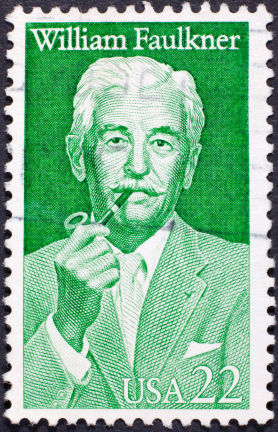
William Faulkner wrote some of the greatest novels of the 20th century,Absalom, Absalom, Sound and the Fury, As I Lay Dying, and created a fiction county across more than a dozen novels that is one of the greatest creations by any writer, any country, any language.

 But when it comes to giving advice about writing, he sometimes has me scratching my head and wondering what the heck was he thinking.

A good example is the statement “In writing, you must kill all your darlings.”

This is one of the most quoted pieces of writing advice.  There's even a movie called "Kill Your Darlings"--though I don't think it has much to do with Faulkner or writing.

 What's he mean?  Kill off your best characters?  The ones you like most?  Or -- as some have suggested -- scratch out the stuff in your book that you like the best?  

And where do you end up if you do that?

Writing something that is full of stuff you don't like?

Crazy. 

Friday, September 20, 2013

Ambiguous Friday Poem

wall

Short, Thin Poem

beneath the red wall 

the clay waits 
for sunshine, 
for rain. 

a chair
is no friend
to red.


_____________________ 
Photo by Grażyna Niezgoda, Meksyk, 2000 

Saturday, September 07, 2013

9/11 -- 12 Years Later


One of the things that the past teaches us is that there is really no end to the past.
I saw this in my parents. For them World War II never ended -- even after liberation, even after forty, even after fifty years. The war and the camps my parents suffered in were always there. A snowy day in November would put my mom back in the frozen beet fields that the German guards forced her to work in that first winter in Germany. A TV show as harmless as Hogan's Heroes would leave my father shaking.

I've seen this in other survivors and veterans, and I'm sure you have too.

What the war taught them was that war has no beginning and no end.

It's the same for a lot of us with 9/11. We want it to have an end. We want what people call closure. We want to get beyond what happened.

We've been fighting the War on Terrorism for 12 years in Iraq and Afghanistan, the Islamic world is changing rapidly where ever we look, and we've killed Osama bin Laden. So why does 9/11 still feel like it happened yesterday? Why does a film clip of a plane crashing into one of the Twin Towers stop us? Why does a voice recording of a stewardess on that plane talking to ground control about not being able to open the door to the cockpit bring us to tears?

We want an end, and we've wanted it for ten years, and it hasn't happened, and it never will. That's one of the things that 9/11 has taught us.

I've written a number of poems about 9/11 over the years. The first one was written a couple days of 9/11. That poem talked about how I wanted an end to 9/11. It didn't happen then, and it hasn't happened since.

Here it is:

Sept 13, 2001

I want to come home
and turn on the evening news
and not see bin Laden,
his terrible lightning
piercing the sky
and showering clouds
of metal down on the streets

I want to say to my wife,
Linda, do you think
it will rain tomorrow?
If it doesn’t, maybe we can
plant those mums in the garden
to replace the verbena
that have been struggling
all summer with the heat,
the sun drying them
to brown slivers, nothing
red or green about them

And I want her to say,
if it rains let’s go to the bookstore
and have a cup of Starbucks
and read some travel books
and talk about where we’ll go
when Lillian comes home
during Christmas break

She’ll need something
to take her mind off
her first year of law school 

________________________

I've posted four other times about 9/11.

The first post was a letter I wrote shortly after 9/11. It's called "The Short View and the 9/11 Terrorist Attacks."  It deals mostly with how my wife's New York relatives, including Uncle Buddy, experienced 9/11.  
The second was an update to that post -- talking about what 9/11 looked like in 2007.

The next was about an anthology of poems on how we look at God since 9/11.
The 2012 post was about Joe Calendrillo, Uncle Buddy's son, telling about his experiences on 9/11.   If you were moved by the "Short View" post, read this post.