Wednesday, July 18, 2007

A Conversation with John Guzlowski

Last January, I went up to Atlanta and met Bruce Guernsey in a Ruby Tuesday Restaurant to do the following interview for Spoon River Poetry Review.

We sat there for 4 hours, eating some pretty bad food and drinking some good beer, reminiscing and talking about poetry. Bruce recorded it all on a little pocket tape recorder, a pre-digital machine from the time of King Sobieski.
.
Listening to the tape after the interview, I said to Bruce, "I don't care how good a poet you are, You'll never be able to make any sense out of these snaps and pops!"

He laughed and said, "Trust me."

I did, and here's the interview reprinted from the Winter/Spring 2007 issue of Spoon River.


THE INTERVIEW:
.
SRPR: John, you’ve been writing so many poems over the last few years and now have a full-length collection and a new chapbook coming out. Congratulations, but weren’t you mostly interested in fiction years back, in postmodern especially?


JG: Yeah, I was reading a lot of Hawkes and Pynchon at the time, but I haven’t been reading much contemporary fiction for years. I’ve been writing poems for a long time, though, but not so many as recently.


SRPR: What do you think has gotten you going? Really, it’s incredible the number of poems you’ve written lately. And they’re hardly postmodern.


JG: I think one of the things that has me writing as much as I am was the death of my father and my mother’s increasing bad health and then her death. I’ve just been thinking about the two of them more, and a lot of the poems come out of my parents’ experiences. I think this is what’s fueling all of the writing.


SRPR: “Death is the mother of beauty.” Yeah, there’s no doubt of it: there’s this organic process involved in the writing of poems that has to do with working through some painful experience. It’s clear that something deep inside has sparked you here.


JG: One thing that happened is that after my father’s death, my mother started telling me stories about her time in Germany. She had never told me these before, so that hearing all of her stories gave me a sense not only of her experiences but of my father’s as well. Many of the things she told me about had really happened to my father. I think that hearing her stories and then putting them next to my father’s got me thinking about the two of them. So, a large part of my writing lately has come from finding a comparable experience my father had to what my mother had told me about her own life—things she never told me before, by the way. She was the kind of a person who would not talk about her experiences, and, honestly, sometimes there were things you just didn’t want to hear.


SRPR: Well, I must say they are not among the happiest I’ve ever read.


JG: In one of the last conversations I had with her before she died, we talked about when she and my father met. I had written a poem about why my mother stayed with my father because I had always wondered why she had. It was a relationship that seemed to be so antagonistic and so bad for the two of them. Maybe that’s why I wrote a poem about it. Afterwards, I asked her if she had ever been happy with my father, and I thought maybe she would tell me about some kind of courtship experience they had had, maybe what it was like in Germany right after the war. Even though it was spring back then and everything was in bloom, she started telling me a story about my father and her that was so ugly, I said “Mom, I don’t want to hear this.” I was hoping for something romantic, but with that story, I didn’t want to hear any more. That was really the last time we spoke about their experiences in Germany.


SRPR: There does seem to be a kind of implied dialogue in your poems as you go back and forth with titles like “What My Mother Told Me” or “What My Father Said” about this or that. I get the feeling of your being almost a little kid in a way, going from one parent to the other trying to get at what was the truth.


JG: Yeah, yeah. I feel that very strongly. I had a poem just published online called “Why My Mother Stayed with My Father,” and I sent the link to a friend of mine. She wrote back and wanted to know how much of the poem was true, and I said to her that it was all true but was a “child’s” truth. That’s the way I saw their relationship whether what I saw was actual or not. It was true to a child’s eyes, mine, as it appeared to me.

SRPR: The cover of your first chapbook, The Language of Mules — there you are as a little boy in your passport picture. I find that picture very revealing. It stays with anyone reading those poems and then, when we get to the back cover, there’s a picture of you grown, looking considerably different than anyone else in the picture: taller, staring off into the distance, almost scoutlike in this new land. It’s as though the poems are the reason you grew from the little boy on the front to the intense young man on the back. The poems were that birth process. I actually had planned to ask you about that chapbook because you did something that I know people will be interested in hearing about: you self-published this book. I know for some people there’s a stigma about self-publishing, so I’m just curious what your experience was. I have a feeling it was the best thing for your poems you ever did.


JG: Absolutely. After a while, I began to think about these poems as a kind of gathering because there were so many and I wanted to put them together. I had always been under the impression that the way you got a book published was you would send things to magazines and then at some point, a publisher would see one somewhere and say, “Wow, this is so good I want to see a whole book of these things.”


SRPR: You still are a child, John.


JG: No, really. I kept waiting for someone to contact me and want to publish a book of my poems. I waited and waited and waited, and what finally was the spur to putting the chapbook together was that I was going to give a reading at a World War II conference, and I was going to have a session all to myself. I thought it would be nice to have something to pass out to the people there, so I gathered together enough of the poems to make twenty-eight pages and put together a cover and went to Copy-X and ran off a hundred copies.

It really was a transforming sort of experience because I never thought that I would get the kind of response to these poems that I got. The first printing cost me about $132 for the hundred copies. My friend and colleague John Kilgore helped me set it up on a word processing program because I was pretty ignorant about what I was doing. I sold all those and ran off more copies over the years. About eight hundred copies altogether. It’s really brought me a long distance.


Bohdan Zadura, an excellent Polish poet living in Poland, saw a copy and asked to translate the poems into Polish, and then Czesław Miłosz saw a copy later and did a review of it that’s included in his last collection of essays. Then later I took a bunch of the poems and submitted them to the Illinois Arts Council and won a fellowship for 7,000 bucks.


SRPR: That’s a great story. Really.


JG: It’s been amazing. Who would have thought? So when people say to me that they’re thinking about self-publishing, I say “Go! Self-publish, by all means!” I was on a panel a while back about this very topic. There were four of us, and the other three all said the same thing: you need to be evaluated by your peers and if you print the book yourself, there’s no peer evaluation, and on and on they went. I said, instead, I printed this little book and it was a good
thing to do. It was the right thing to do.


SRPR: Maybe the way to think about peer review is whether you’ve placed work in magazines, reasonably respectable ones. If you have a group of twenty or so poems and more than half have already been published, then your work has actually been reviewed. I think it’s more than fine to go ahead with your own book then. The magazine publications are a good criteria. All the contests that exist today make publishing a book a lot different now than it once was.

JG: Contests! I think of all the money I’ve spent sending my book around for $25 a pop to twenty or so different contests. I could have published the book myself for that money. Published and distributed it.

SRPR: I’m sure you’re not alone here, John, but I’d like to get to a different topic if we could. I’ve been meaning to ask you about translations. Your chapbook, The Language of Mules, was translated into Polish and that’s the version of the book that Miłosz read. Do you or did you speak Polish yourself?


JG: I speak Polish, or a little anyway. What I call “kitchen” Polish — I speak it and have tried writing in it. In fact, one of the first poems that I wrote about my parents, “Dreams of Warsaw,” I wrote an early version in Polish and then read it to my parents. My mother said, “It sounds like a country and western song.” That’s because even though I thought it was in free verse, there are just so many rhymes in Polish that the poem came out with a kind of rhythm to it and so sing-songy that my mother said it reminded her of “a hillbilly tune.”

SRPR: What did you do then—did you translate it into English?

JG: Well, sort of. I took the last lines, “Where are the horses / where are the horses” and started over from there.

SRPR: Could you write the poem out for us in Polish?

JG: I could, but only phonetically. I can’t write in Polish. My knowledge is oral.


SRPR: I think I’m trying to get at a point here. Your poems are wonderfully simple and direct and remind me in that way of some other poets who are essentially writing in English as their second language. Charles Simic is an obvious example—from Yugoslavia to Chicago—and then another Illinois poet, Carl Sandburg, who grew up hearing Swedish before he knew English. And then there’s John Guzlowski, who also moved to Chicago, writing in a similar uncomplicated style.


JG: It’s funny you say this because I have a PhD in English and have taught for what, almost thirty years, and still get idioms mixed up and words turned around. I know there were times when the students thought for sure that I didn’t know the language. You know, my mother learned to speak English very quickly, but as both my parents got older, they lost a lot of what they’d learned.


SRPR: I guess that’s because they learned it. Polish they lived. That’s like this guy I knew in college who grew up speaking Spanish but was absolutely fluent in English. No accent or anything until he’d get really upset about something, and then he reverted to Spanish. His emotional life was connected to those first sounds he heard, but I guess that’s where our emotional lives are, down in those deep recesses of language.


JG: That was sure true for my mother especially, who knew all kinds of Polish folk sayings and songs. Real simple, direct bits of wisdom. I think about what I was paying most attention to when I was in my teens and that was folk music. Maybe I was attracted to it because of that same simplicity.


SRPR: Elemental, that’s how I’d describe your poems. Hardly ornamental, thank God. But now that I’ve been praising the hell out of you, do you think you sometimes get a little repetitious?


JG: Oh yeah. I worry about that. But I think finally what I’m doing is trying to get deeper into a poem, to elaborate on something I did in an earlier poem.

SRPR: Or maybe this is an editing problem, of taking some poems out that seem to cover the same territory. When you had this group of poems together to make the new book, what led you to choose some poems and not others?

JG: The new book actually had all the poems in it at one time. But it was about 180 pages long. I knew that wouldn’t work. So I tried to develop a strong sense of narrative as a way of unifying it, which is ironic in a way because the book starts out backwards with the death of my parents and moves all the way back to their childhood in Poland.

SRPR: Is this an influence from your fiction days? I mean, you’ve written a lot of short stories.


JG: Yeah, I did a lot of short stories, but when I started writing poetry, I stopped writing fiction. It’s been twenty-eight years since I’ve written any fiction, though my own complaint about my poems is that I sometimes think they’re too prosy. Just too many "that’s" and "which’s" in the poems. Too much reliance on transitional words that we use to make sentences


SRPR: Thank you for saying that. I don’t mean about your work, I mean about so much I read that’s prose chopped at various predictable places. Why bother with line breaks?


JG: Well, I try to work on those. Probably the poet who has influenced me the most is Robert Frost. I’m always thinking about the way he broke his lines, especially in the great narrative poems like “Mending Wall” and “Home Burial.” That’s poetry.


Bruce, can I say one last thing? About Spoon River?


SRPR: Sure. Go ahead.


JG: I’d like to thank you for reconnecting me with the journal. It represents a lot to me. One of my first poems about my parents appeared in Spoon River back when it was a quarterly. The poem was “Pigeons,” and Lucia Getsi was kind enough to print it. In a slightly different form. As I recall, she felt the opening moved too slowly, and she took the time to ask me to rethink it and she even gave me some suggestions. What I’ve come to realize over the years is that not many editors would do that. I rewrote the poem, and she took it. I was very happy to see it in Spoon River.


The journal also means a lot to me because it reminds me of all the fine poets and writers who have come out of central Illinois in the last decades, you and Lucia and Curt White and Jim
McGowan and Kathryn Kerr and Helen Degen Cohen and Kevin Stein and Ray Bial and David Radavich, and so many others whose names I’m forgetting but whose writing moved me. Really, it was an amazing gathering, and I hope Spoon River is here for decades and decades more to give poets a place to connect with readers and other poets.


SRPR: That’s kind of you, John. We plan to keep it going, one decade at a time.
(If you want to find out more about Spoon River Poetry Review and see some of the other interviews they've published and read some of the poems that have appeared there here's there URL: http://www.litline.org/spoon/.)

Monday, July 16, 2007

I'm No Sharon Olds.

I was at Deborah Ager’s blog (http://blog.32poems.com/) yesterday—checking things out. I got there because I was checking out my friend Mary Biddinger’s blog (http://wordcage.blogspot.com/). [This checking blogs out is something I like to do now that I’m officially famous for blogging (see my article about blogging: http://www.new-works.org/).] As I was checking out Ager’s blog, I noticed a letter from Sharon Olds. Deborah had found it somewhere and reprinted it at her blog. Sharon is a substantial poet and she had been invited by Mrs. Bush (wife of the Decider) to attend a Library of Congress poetry event and to have breakfast afterward at the White House. Sharon’s letter was addressed to Mrs. Bush and explained why, although Sharon really believed in the good that events like the one at the Library of Congress could do, she wouldn’t attend because of her opposition to the undeclared and devastating war President Bush and America were waging against Iraq. I read Olds’ letter, agreed with her completely about the war, and wrote a comment that I left at Deborah Ager’s blog. Here’s what I wrote: Hi, I just sent in an application to read a couple of my poems about my parents and love at the Valentine’s Day “poetry at noon” session at the Library of Congress. (One of the poems is Why My Mother Stayed with My Father and the other is What the War Taught my Mother. My parents met in a concentration camp. It was never Romeo and Juliet for them. I figure I’ve got a chance as a novelty act! Not your traditional love poem!) Anyway, I’m a long shot at best (the 500,000 poets in America who are better than I am would have to decline their invitations to read at the LC before I got a chance), but reading your post of Sharon Olds’ letter makes me think about what I’d if I were chosen. Would I go? I hate to admit this because it makes me seem petty and non-serious and a traitor to so many things I believe in, but yes, I would go. Absolutely. The chance of me getting invited twice to the Library of Congress is about the same as the odds of me giving birth to the next Mother Theresa (I’m male and no longer Catholic and not even very charitable–lepers stay away from my door!). If I were invited, it would be a one time invitation. Sharon Olds? She can turn down Bush and still have a chance of being invited by Obama or Hillary or John Edwards. Probably even a better chance. For weekly cabinet meetings maybe. Or brunch or something. But me? It wouldn’t matter if Barack or Hillary or John were in office. It wouldn’t even matter if my brother or sister in law were in office. I wouldn’t be invited. So, I’m telling everybody now (and I hope they hear this at the White House and the Library of Congress!!) that if invited I will attend, and I will pay for my own carfare (from Valdosta, GA) and my own lunch! John Guzlowski–poet-in-waiting

Sunday, July 01, 2007

FAMOUS FOR BLOGGING!

I started this blog with a post about the swamps burning east of Valdosta and sent a note about the blog and the post to friends. Charles Fishman, the poetry editor of New Works Review, saw the post, thought it was neat, and asked if he could publish it at his online journal.

I said sure and kept writing about the swamp and the smoking and sending the posts to Charles Fishman.


That led to his asking me to write an article about how I got started blogging and what the point of it was and what writing a blog was like. I wrote the piece.

The piece appears at New Works Review, along with the entire epic of the Smoking Swamps that smogged up Valdosta, Georgia, for more than a month.

Here are the links:

Smoking Swamps--http://new-works.org/9_3guzlowski/swamps.htm

Blogging essay--http://new-works.org/

Wednesday, June 27, 2007

Brushes with Fame

I was at a blog site reading a posting about brushes with famous writers, and I started thinking about them. About brushes with fame.

When I was in grad school at Purdue, people would sit around for hours and talk about their brushes with fame. How they met James Cagney or Al Pacino or Martin Luther King. How they had slept with Mick Jagger or Bob Dylan. How they were hitch-hiking and got a ride from Jim Morrison. That kind of stuff.

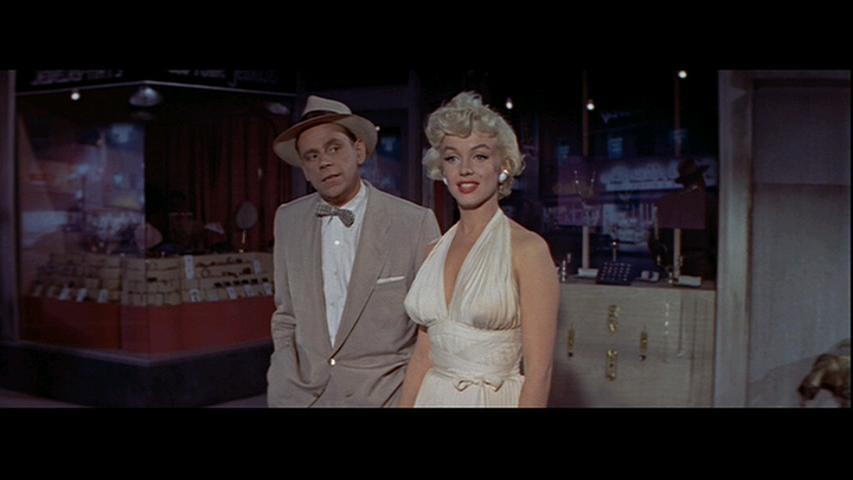
I haven't had many of those brushes with fame. I once ran into Tom Ewell (he was in The Seven Year Itch with Marilyn Monroe) in a subway station in chicago. This was shortly before he died. He was in Chicago to do a play, and he was in the subway, staring at the wall above the third rail. He looked tired, worn, unhappy, gloomy, like an ice-cream bar that was melted and refrozen. I didn't say anything to him.

(I'm thinking that maybe not many people remember Tom Ewell. That's what fame is like.
.
What's Sinatra say?
.
You're riding high in April and then you're shot down in May.
.
Anyway, here's a picture of Tom Ewell to help jog your memory. He's the one next to Marilyn Monroe.)
Whenever I think about brushes with fame, I think about what Isaac Bashevis Singer said about his favorite writer Dostoevsky: "I wouldn't cross the street to talk to him."
.
I feel that way some times about meeting writers. There's a kind of ecstacy that I feel in reading, and when I meet the writer of what gave me that surge I don't feel that ecstasy. I'm not sure why that is, but I just don't feel it.
.
Maybe it's like when we get high with someone, and then later after the high starts wearing off we're standing around and wondering about what it was we were laughing at, and all we notice is that we're both wearing gray wrinkled suits.
.
PS: I just remembered that my daughter Lillian had an amazing brush with fame. Rosa Parks came to her class when she was at the Illinois Math and Science Academy, and Lillian had lunch with her! That means I've had lunch with somebody who had lunch with Rosa Parks!
.
PPS: Lillian just called to ask me, "How can you write a blog about brushes with fame and not mention your most famous brush with fame?" I said, "What do you mean?" She said, "Don't you remember the time you almost ran over the nobel prize winning novelist Saul Bellow?!?!?!"


Wednesday, June 20, 2007

59th Birthday Post!

Hi, I wanted to post something special for my birthday, but now that I'm going to be 59 I've starting to get lazier so I'm just going to re-cycle something I wrote when I was 54. Hope you don't mind.


It's a poem (a sonnet!) I wrote as part of a special feature in the online Culture/Arts/Literature journal The Scream on Line (http://www.thescreamonline.com/). The editor Stuart Vail asked a number of writers to write about the topic "Coming of Age." I wrote a long three part poem called "1968" about what that year was like for me, and what follows is the final section of that poem.


The poem talks about what "Coming of Age" means to me. When I was younger I thought that there would be these great defining moments in my life that would transform me. Those moments would take the kid I was and put me through the whirlwind, shake me up and spit me out in a three piece suit or a scuba divers' mask, and the rest of my life I would be the person the whirlwind experience made.


What I learned was that that's not how life works for me, or for most of us. But I'm talking too much.

Here's the poem:


Coming of Age?


I'm 54 and next year will be 55
(on June 22 if you want to send flowers
or candy), and what I’ve learned about
coming of age is that we come of age
-
the way the great glaciers come of age.
Slowly. One year we melt a little.
The next we freeze a little. A wind
comes from no place and shines up
-
our northern walls. The next year
the wind is a little stronger or weaker.
We don’t change the way people in books
change. Today’s hero, tomorrow’s fool.
-
Our future—a patient grandmother
with a toddler in hand—comes slowly.


If you want to see the rest of the poem that that came from, it's at


Wednesday, June 13, 2007

Players in the Dream, Dreamers in the Play

I read Marian Shapiro’s book of poems Players in the Dream, Dreamers in the Play on the plane flying to and from Detroit last weekend for a Polish American Historical Association meeting; and I enjoyed those poems very much.

Usually, for me, flying isn’t the best way to spend my time. I commuted by plane from Valdosta, Georgia, to Central Illinois every week for two years, and doing that kind of traveling will sour you pretty much on being in close quarters with extremely strange strangers. But don’t get me wrong, I would have taken to Marian Shapiro’s poems even if I wasn’t flying.

The voice in her poems is a calm, smart, affirmative voice. It reminds me of one of my favorite poets, Elizabeth Bishop. Bishop can take the most harrowing sort of experience and see it plainly and lovingly.

I felt this throughout Marian’s book, but maybe I felt it most in her poem “Inside Looking Out”; two worlds come together suddenly in that poem, and one of the worlds is scary and threatening, but Marian’s voice and the surprise in it makes that world a puzzle and a mystery to be examined and wondered over.

Marian’s not frightened or shaken in her poems, just amazed and wondering. It's the way kids are when they meet "the strange." They want to look and consider; they want to play with the mystery and the strange things they find in it. If you’ve ever seen children looking at a chicken and wondering about it, you will know exactly what I mean.

That's the image I get most fully and most often from Marian’s fine poems, the image of someone playing with the things we don't understand or the things we fear. I don't mean “playing” in any kind of goofy way, but rather in a serious way, the way children and the best artists play with the strange gifts the world offers them.

I see this in so many of Marian’s poems, in the things she writes about and the ways she writes about them. These are poems to read over and over again, whenever we need to remind ourselves that the world's troubles and mysteries are maybe best viewed with calm and wonder and love.

Here’s Marian’s “Inside Looking Out” poem, the one I mentioned above:


Inside Looking Out

Through the slatted shutter, or
the fluttering of a pale peach curtain, I
glimpse a small white dog (poodle? terrier?) leaping,
light with freedom. The owner stands by, benignly.
Lovely day. Summer sun reflected in
puddles of last night’s shower. Laughing girls
as background music. Truck horns on an unseen
highway. Doppler of a distant freight
train. Mozart from an open window.

Who would have thought it! Sudden as
a nightmare, springing from the nowhere
of once and when, black mouth gaping, a wild
mangy creature (wolf? coyote?) wraps teeth
around dog collar as you or I might deftly
loop crochet hook into wool. Blood, cotton balls
of fur, guts, bones in slivers, shrieks and barks,
howls and the soft sound of children weeping. Is
this my dog? Was this my dog?


If you're interested in seeing more of her poems, you can click on the Amazon link to her book Players in the Dream, Dreamers in the Play. You'll find the link by scrolling down and looking on the right of the screen.

Sunday, June 03, 2007

Tony Calendrillo's Art

Here's a photo I took of Tony. He's in his basement, pulling a painting out to show Linda and me. It's a recent painting, part of a series on religious themes. His basement is filled with paintings and sketches and drawings and sculptures and frames he's constructing. It's quite a place. You can spend hours there looking at stuff, and hearing Tony talk about the projects he's working on or planning to work on.


I've known Tony for about 35 years now. He's an artist and my father-in-law. When I first met him, he wasn't doing much painting. He was 50 and busy with his day job as a textile stylist in New York. He designed patterns on cloth, I believe. He'd draw soft yellow roses the size of a child's hand that would be used to decorate a white table cloth, or he'd work up a herring bone pattern in different shades of brown for men's suits. That kind of stuff.

He had some of his paintings on the walls of the house he and his wife Mabel shared in Brooklyn. They were good paintings. I remember one of him, a self-portrait. He could have titled it "Portrait of the Artist as a Young Brooklyn Guy Just Back from World War II." In the painting, he's holding a palette and some brushes, and he's looking at you like he's happy to be painting a picture rather than listening to Sergeant Novak's yap about doing latrine duty or holding the line against the Nazi tanks.

Tony seems happy and confident and eager in the painting, but you know he's serious too. The eyes in the picture give him away.

He wasn't painting much when I met him. I don't know if he was painting at all. He loved to talk about painting and art, and he loved to go to museums to look at paintings and drawings, but I don't think he was painting. It was like that was all behind him, left back in the past with the mustache the young guy just back from the war was wearing in that painting.

But then he retired.

And he started painting again, and doing water colors, and drawings, and doing art stuff he never thought about doing when he was doing art stuff. He started sculpting and taking art classes and displaying his paintings in galleries and hanging out with people who loved painting and drawing as much as he does. His paintings and drawings and watercolors were on exhibit in a one-man show at the Main Library in Bridgeport, CT, this spring. They may still be up!

Here are some of his paintings that I like a lot, and a photo of him working.


That's a painting of his daughter Linda, my wife. She's about 11 or 12 years old in the painting. She remembers she was at Fire Island with her family, and her dad was on the back porch painting. She was reading a book, and he said, "Keep reading, Linda!" She can't remember much about being painted this particular time because he was always painting her.


I don't know when Tony did the above painting of the building and the bridge. I asked Linda which bridge it was that's behind and above the house, and she said, "Maybe the Brooklyn bridge or the Manhattan bridge but you should call my father and ask him." So I called him and asked which bridge it was and where the house was, and he laughed and said, "I made it all up!"
The important lesson here is that you can't really trust artists. They tend to make stuff up. I am sure that Tony at one time or another gave me very specific information about this painting. Where it was set! The year it was painted! The name of the bridge! Even the season of the year! I'm not sure whether he was making it up then, or whether he's making it up now.

Part of the reason I like this painting of the house and the bridge is because when our daughter Lillian was a kid, I mean a really small kid, she used to think that this was a painting of her mother. If you look really close above the porch on the left, there's an open window with a woman looking out. That's Linda! At least that's what Lillian thought.


This is one of Tony's Fire Island paintings. I like the softness of the boats and the vividness of the colors, the way the sand almost looks like waves. When I see this painting, I think of Edward Hopper and Salvador Dali, guys who probably never met but if they had they would have had a good time talking to Tony.

Here's a photo of Tony working.


He's reading a book of Van Gogh's letters.


Saturday, June 02, 2007

Smoking Swamps, Part 9

Photos of Rain

This is a shot of the east side of the front porch, the verandah. I wanted to take a shot facing east but I didn't want to get off the porch and get wet. You can see the rain coming down off the roof at the top of the picture. Houses in our neighborhood are old, and they're built in the historical architectural style, without gutters. It's really a nice feature. When it rains in the summer we sit on the verandah, watching the rain pour off the roof. Sometimes we drink some red wine when we sit out there. If we had gutters, we wouldn't have our own waterfall.


Here's another shot of the verandah. That's the swing in the background. Linda wanted me to include a photo that gave you all an idea of the size of this porch. I don't think there's enough rain in this picture but I'll include it anyway.


This is my neighbor Irvin's water drain. Irvin runs the Fairview Inn, a very nice B & B next door. That's rain coming out of his water spigot, drain, gutter, whatever it's called.

I just realized Irvin must have gutters. Poor guy. When it stops raining tomorrow, I'll ask him if he needs help taking them down.


We're moving to the backyard now. I took about 47 photos of the backyard, the pool, the rain gauge, and all the puddles on the drive way, but my hands were shaking with excitement so most of those pictures came out looking like my hands were shaking. A couple survived. Here's one:


I just noticed that Billie Holiday is on the CD player. She's singing, "Look, how it's raining, daddy, look how it's raining, the wind keeps blowing, and look how it's raining, daddy, look how it's raining. It's raining all the time."

It's a blues song she's singing. There's sorrow and loss and enought pain for a churchful of sinners in it, and you can feel it all coming up from the bottom soul of her voice like rising water.

And I'm listening to her blues and thinking, "Today, Billie, it's a good day in Georgia," and on the CD she's singing, "Ain't the rain just beautiful, some people say."


Smoking Swamps, Part 8

Rain and more rain!


Friday, June 01, 2007

Smoking Swamps, Part 7

It rained last night.

For the first time in 3 months, rain fell here. We were sitting in the family room watching the French Open when I looked out the backdoor and saw that the deck looked wet.

"It's raining," I said to Linda, and she said, "Maybe it's still the water you sprayed on the deck earlier."

That morning, I noticed that the deck boards had started to curl up like old leather shoes and all the nails in the boards had come loose. Three months without rain had drawn most of the moisture out of those boards, and there wasn't even enough in them to keep them secured with nails to the frame of the deck. I got out the garden hose then and sprayed the deck for about 5 minutes.

That was in the morning, but now when I went to the window and looked out, it sure seemed like rain.

I opened the doors and walked out. Yep, it was rain.

It was coming down hard too. This was no weak spit or cloudly, dreamy wetness. It was rain.

Opening the door, I stepped out and felt the drops on my face and felt my T-shirt getting wet. If I were a kid, I know what I would be doing. I'd be running around the backyard shouting, "Whhheeeeeeeeeeee!" I'd be stopping for a moment to look at the fish in the pond slurpping up the big bubbles that the rain was dropping in the pond. I'd be watching the red and brown cardinals trying to shake the dust and ashes off their feathers, watching them preen all stiff feathered and happy. Then, I'd be running again, and going next door to see if Irvin, my 60-year old neighbor, was running around in his backyard too , getting wet as could be because now we could.

But I didn't. I just walked to the rain gauge nailed into the railing of the deck, and made sure it was secure in case the rain really started coming down heavy and hard in a Noah-sized old-fashioned Georgia downpour, the kind you hear about in that Gladys Knight and the Pips song. Then I went back inside to watch the always serious Nadal zoom around the red clay of that Paris tennis court like he was some kind of blue bumble bee in capri pants.

* * *

This morning I woke up early while it was still dark, and I went out on the deck. The boards were creeky and dry. I checked the rain gauge. About a tenth of an inch had fallen.

I could still smell the smoke in the air. It smelled the way a wet cigarette would smell if you brought it close to your nose and drew the smell in really deep.

In the Valdosta Daily Times this morning, there wasn't any mention of yesterday's rain.

Tuesday, May 29, 2007

Lightning and Ashes


When I started doing this blog, I never intended it to be just about the swamp fires. I wanted to have a place to talk about a lot of things, including my writing.

I've gotten side tracked some.

In fact, I saw Mary Biddinger's blog about her book Prairie Fever, and I thought, "I should do a blog on Lightning and Ashes!" So I started a blog on my new book.

But now I'm starting to think I should be talking about it here too. So I will.

For my Lightning and Ashes blog, I wrote a piece called "How I came to Write It."

Here's the beginning of that article along with a link to the other site:

I started working on the poems for Lightning and Ashes after my father died in 1997.


Before he died, I thought I was finished with writing about him and my mom. I had started writing about them in 1979, and now I had written about all the poems I thought I was going to write about them and their experiences in the Nazi slave labor camps. I had written about how he and my mother were taken separately from their homes in Poland, about what their experiences in Germany were like, and about what life was like when my parents and my sister and I came to America.

I felt I had said all I had to say about that part of my parents' life and what it meant to me. After he died, I gathered all of these poems together and started thinking about publishing them in a chapbook, Language of Mules.

////

That's the beginning of the piece on Lightning and Ashes. Here's the link to the rest:


Smoking Swamps, Part 6

I got a note from our daughter Lillian this morning.

Here's what she said:

I read an article the other day about how a blue moon is technically the second full moon within a month, which isn't all that rare. However, they say that you can actually get a real blue moon, one that actually looks blue, if there is a lot of smoke and ash in the air.

So you two should put on your masks on Thursday night and go look at the blue moon.

Love,

Lillian

Sunday, May 27, 2007

Smoking Swamps, Part 5

This is my latest posting about living under the smoke cloud that hangs over south Georgia. The smoke is from the fire that has been burning in the Okefenokee Swamp for the last 2 months:

My friend Pat owns a bunch of chickens, and they live outdoors in a coop. I asked Pat how they were doing in the smoke. She lives about 3-4 miles closer to the Okefenokee than we do, and I've seen how hard the cardinals and the morning doves around my house are doing with the fires, so I was curious about her chickens.


Pat said that they seem to be doing fine. They don't seem bothered by the smoke, and she promised to take some photos of the chickens in the smoke. The chickens are beautiful, and Pat is right: the smoke doesn't seem to be bothering them.


When I saw these chickens, I said to Pat's husband, "Consider the chickens in the coop."

He's a prof at Valdosta State University, and he smiled and replied, "They neither toil, nor spin."

Then, we all looked at him and laughed.

Smoking Swamps, Part 4

Someone wrote asking for some more pictures, so I put on my blue face mask and went outside this Sunday morning about 6:30 to walk around the neighborhood and take pictures.


The above photo looks east toward downtown Valdosta. The spire belongs to the Baptist church. In a couple of hours, there will be a service there, and cars will be driving down River Street toward the church.


We're looking west on River Street. About a couple blocks away is the new funeral home, beyond that is Walmart and the Sam's Club and the Interstate, I-75.

Periodically, during the last month, it's been closed. The day we drove to Jacksonville, Fl, interstate I-75 was closed from Tifton, about 40 miles north of us, to Lake City, Fl, about 70 miles south. I-10, the other interstate we take to Jacksonville, was closed for about 60 miles.

We drove back roads. Some of these roads were also closed because of the fire, so we zig-zagged most of the way to Jacksonville through smoky little towns in south Georgia and North Florida, like Lake Park, Jaspar, and White Oaks.


The sun starts coming up. It's rising over Okefenokee Swamp where the fires are still burning. There may be some rain next Saturday. They're praying for it at the Baptist church and in all of the churches in Valdosta. They're probably praying for rain in the supermarkets and the gas stations and the homes and the movie theaters too.

Saturday, May 26, 2007

Smoking Swamps, Part 3

My friend Lisa Childress from Charleston, Illinois, read my blog about the smoke and asked if they had evacuated people around here.

I told her they evacuated people closer to the swamp where houses were burning, but we're about 45 miles from the swamp. 45 miles away we're getting smoke and ash but people are surprisingly living with this. Adults sit on their porches or talk to neighbors across fences, kids run around in masks shooting water guns at each other, people drive around with their windows open. Some friends of ours whose house backs onto the swamp are having a Memorial Day barbecue tomorrow.

And this morning, when we went to Sam’s Club looking to buy another air purifier, the first person Linda and I saw in the parking lot was pushing a cart and smoking a cigarette. We looked at each and shrugged.

But the birds seem heavier, especially the cardinals. Usually, the ones in the back yard tend to sit high in the crepe myrtle trees when they aren't flitting around, but now they sit low, close to the ground. When we put on our face masks and went out this morning, there was a cardinal perched on one of the white Adirondack chairs by the pool, two other cardinals were on the deck, a fourth was standing on the ground.

That cardinal didn't move when we passed it to get to the garage. It just stood there, maybe waiting for the smoke to clear so it could breathe. I thought about the way birds work, their hearts beating at a 1000 beats a minute when they are flying. I thought about the way their lungs would have to work to breathe fast enough and hard enough to get that heart beat up so that they could fly away through the smoke and the ash here.

Thursday, May 24, 2007

Smoking Swamps, part 2

It's 1:45 in the afternoon, and the sky is pink, and it's raining ashes. There are ashes falling on my house and car and deck.

It's so dry that the wood on the deck has cracked, the nails have separated from the wood, the boards are curling up like old shoes.

Linda and I have bought face masks.

She sits in her dean's office with her blue mask on.

Tomorrow, she is taking another mask in to give to her secretary who has lost the ability to speak because of the smoke and ash in the air.

We have four air purifiers running all the time--and it's not enough.

Wednesday, May 23, 2007

Smoking Swamps

I was feeling better despite my ears ringing until the swamp started burning about 2 months ago.

This sounds like the beginning of a great story, but it's not. The swamp's lost about 60,000 acres, and the animals in the okefenokee are going deep into the swamp. Toward the center where there is still some moisture, some dampness and humidity, and swampiness. Everything that hasn't been boiled or burned is moving toward that center, and fighting for any kind of space it can find. Imagine the bear and the alligator and the peregrine chipmunk all in the same place. Eyeball to eyeball, nostril to nostril. Eating from the same blade of grass, hoping as only dumb animals can hope for the delivering miracle around the corner.


And here I am 60 miles from the burning center of the fire. For a week the winds were from the east, and we woke in the mornings to the smell of the swamp burning, the tall georgia swamp pines burning, the high dry grass, and the low dry wire grass, all burning. And the smell of pre-fab homes and trailers in Astoria burning.


Clouds coming over Valdosta from the east, first they were a light yellow, and then got darker, pink, brown. Soon there was a haze outside the house, and we stood in the house and looked out the windows at it, and thought, well, we're okay, then after a day or two, it started coming into the house. And you start thinking how this secure old house with its insulation, and dry walls, and rehabbed ceilings and doors and windows is really porous. These old walls are like window screens.

And people start worrying about--what happens next. What if the winds are from the east tomorrow too. And they were. And people start wondering about what if the winds are from the east for two days, or a week, and they are.


Mercy, Jesus.

And the churches start filling up, and people stand on their back porches and talk to their neighbors about the end of the world, and what is it we're doing to the environment. And somebody mentions Cormac McCarthy's great new novel The Road, about a world where every living leaf and blade of grass has lost the will to live, and has turned to ash because of the chemicals the world is dumping on them. And everybody thinks that maybe it is too late, because we all know what the world has been doing to itself for 60 years at least, and that the jig of the world is up.

But it's getting better -- the swamp fire. At least, we think that.

But it will turn worse I reckon. It's the end of the rainy part of the year, and it hasn't rained here in 3 months, not really. So it will probably be burning in the swamps again. Much nearer in fact too. South Georgia is not agricultural. It's timber and logging. Really. You drive from Valdosta to the Atlantic and its 120 miles of forests that get logged. Same thing from here west and north and south.

All we can hope for is really biblical hurricanes that take the great flooding waters of the huge gulf of mexico and send those waters down upon our heads, for a hard and long time.

And those hurricanes?

They will wreck us like a semi rolling over a crate of eggs. Soft boiled, hard boiled, or uncooked.