Wednesday, August 28, 2013

Old Poems

I've been going through all those old poems of mine trying to patch together a new book of old poems. The poems go back 20-30 years and some are okay and some are so dreadful that no muse can fix them, and I wonder what I'm going to do with these. I know what will happen to the good ones. I'll put them in the book.

But the bad ones? 

What do you do with embarrassing poems? 

It reminds me of a poem I wrote a while ago. 

It was about Whitman's final Death Bed Edition of Leaves of Grass and how some critics think he put too many of the bad poems into it.

Anyway, here's the poem.

It's called "Please Talk About Me When I'm Gone."  -- I'm not sure I'll include it in the book. 

Please Talk about Me When I’m Gone

Really, I think we can't think about good
and bad poems when we think about
our life's work. You look at Whitman’s Death-
bed Edition of Leaves of Grass--98% garbage—
Weeds of Grass--but nonetheless it's all fine.

Likewise, William Carlos Williams.
Did we really need so much of Patterson?
Or how about Ginsberg? Please, no more “Howls”!
Who would say such a thing? We all agree--
There it all is, and there it all should be.
Let’s not quibble. Let's just include it all.

I have poems in my unpublished collection,
"Idiot's Guide to John Guzlowski,"
that--in all modesty--are abominations.
If Moses had read them, he would’ve written
a commandment against them, maybe even two.

Really. So let's not think about being too critical.
Let's let future generations of literary critics
and readers, if there are any, sort all that out.
I mean, there must have been some real reason
Williams asked forgiveness for writing about
the icebox and eating those delicious plums.
How sweet and cold could they have been?

Wednesday, August 14, 2013

Welcome to Reality


(photo from the blog--world of fallen angels)

Friday, August 02, 2013

Friday Poem: Our Daughter is Outside Playing


Friday Poem: Here's a poem I wrote one spring long ago when we were living in Charleston, Il, and the weather was really bad. 

Our Daughter Lillian is Outside Playing

In the quiet space of the dining room
My wife and I lay out the place settings

The forks beside the Wedgwood plates,
The spoons and knives in their places.

A napkin in her hand, she pauses
And tells me again how her mother

Would starch and iron the squares of cotton
Wash the plates by hand and again by machine.

I smile, nod my head and turn to the window
See the roof next door lift, shingles

Exploding like scattered sparrows, and there
It is—the howl of the locomotive wind

And then a pounding at the glass door
And a screaming that will not stop.

Tuesday, July 30, 2013

What is Heaven? What is Hell?


Here's a link to an article about Hemingway's dreams of hell and heaven.  It's based on a letter he wrote to Fitzgerald when he was 26.  

In that letter Hemingway said, “To me a heaven would be a big bull ring with me holding two barrera seats and a trout stream outside that no one else was allowed to fish in and two lovely houses in the town.”

I thought this description of heaven interesting.  It seemed to be a young man's dream.

A young man's dreams of heaven are  not an old man's dreams of heaven.  

For an old man heaven isn't sports or houses, it's the people he's loved and the people who have loved him.   

Hell is a world without them.

To read about Hemingway's letter, just click here: Hemingway on Heaven and Hell. 
___________

 I almost forgot.  Here's an online anthology I put together of 37 recent poets writing about Heaven and Hell.  Just click here:  Scream online.

And to top it all off an old blog about my daughter Lillian's thoughts about Heaven when she was a child: Lillian's Heaven

Friday, July 26, 2013

Friday Poem: No Sweet Land


Friday Poem: This poem is one I wrote long ago, maybe in the 1980s, during a really dry summer in central Illinois. People used to joke that the dust clouds blowing overhead were the fields of Kansas and Missouri, turned to dust by the everlasting sun that summer. The poem was originally called No Sweet Land and later I had it published as Drought. 

No Sweet Land

Sarah says

see my little girl
she can read a book

make change for a twenty
tell you what star is what

she doesn't need
school love dolls

she knows winter is hard
beds are soft

pumpkins
grow on vines

she knows
what's useless

the soft spade
the easy turn

maybe in Mississippi
somewhere

the soil is sweet
ready for asparagus

or juicy fruit
but not here

here the ground is clay
more clay than dirt

here, you see a dog
you know he's leaving

________________________________-

The photograph is by the great Dorothea Lange.  You can read about it at the Library of Congress site devoted to photos of the Great Depression.  Just click here: Migrant Mother.

Wednesday, July 24, 2013

New Poems, Old Poems Published


I've been getting some poems and short fiction pieces published recently online, and I thought that I should probably post links here.  Just to keep track of things.  Some of the work is new and some of the work is old.  The old pieces are a part of a larger project I'm working on.  I want to put together a book of the poems I've written over the last 30 or so year that aren't about my parents and their experiences in the war.

So here are the links.  Just click on the titles of the works, and you should go right to them.  Let me know what you think.

Here are a couple new poems -- "Eye Contact with the Dead" and "The World After the Fall"-- that were published by 2River.   The poems are accompanied by a voice recording of me reading the poems.  Pretty neat.

My prose poem "The Last Day of Life on Earth" appeared in the Atticus Review earlier this year.

The poems "River City Blues" and "Trees in Late February (Kennesaw Mountain Battlefield, Georgia)" were published in Prime Number 37.  Following the poems there's a little Q & A about what I think about the blues.  Don't forget to read that.

"At 40 His Wife Begins to Write Poems" appeared in The Original Van Gogh's Ear Anthology.  Despite the pronoun in the title, the poem is about Linda and these weird dreams she used to have that inspired her to write some really good poems.

"My Mother's Optimism," a poem about my mom and her two cancers, was reprinted in the journal R.K.V.R.Y.  Accompanying it is an interview I did with the poet Anne Colwell.  Following the interview there are links to some other poems I've had published online in the last couple of years.

I had two prose poems in Postcard Shorts, an online journal devoted to prose poems that can fit onto the back of a postcard.  (Isn't that a neat idea!)  The poems are "My Mother's Funeral Service" and "Sometimes," a piece about a Christmas Eve in World War I.

Three older poems -- "My Mother Was 19," "Temptation in the Desert," and "Sometimes I Wish I Had a Theory of Poetry" -- were reprinted in Redux: A Literary Journal.

I was also interviewed recently by Rattle, a really fine journal.  I talk about how I started writing and the style I use in the poems and talking to my mother about my poems.

I've also got some poems coming out that I'll tell you about later.  One that I'm really excited about is called "6 Short Poems about the Monk Ikkyu" that will be in Buddhist Poetry Review.

And I almost forgot, Snake Nation Review just published my short story "Dinner in Wartime."  It's not available online but you can buy a copy at the Snake Nation site.  Just click here to go there.


Thursday, July 18, 2013

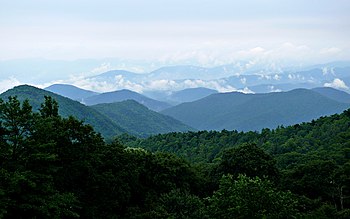
Mountain in West Virginia


Mountain in West Virginia

On the lone mountain
there is only sky above,
and rock below
my hands
and climbing feet

and far below is the forest

its shadows and soft trees
like clouds, like waves moving
with the hot wind from the valleys

rising up the hills with voices

of old lusts   old dreams
old terrors

but somewhere
in the forest the lichen
is green--the creek wet
and cold

Wednesday, May 08, 2013

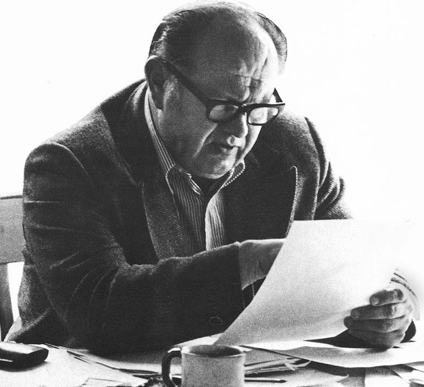
"Letter to Levertov from Butte" by Richard Hugo


There are a lot of poems that I love, and one of them is Richard Hugo's prose poem "Letter to Levertov from Butte."

I don't remember when I first read it.  Maybe in grad school, maybe earlier, but I know what it means to me.

It brings me back to the time when I was living in Chicago, after I graduated from college and really didn't have a much of a sense of what I wanted to do with my life.

I was working on the docks as a longshoreman.  I worked crazy hours, sometimes double shifts, sometimes triple shifts.  It was kind of pleasant early in the summer when I started, but as October started up, it got to be pretty hard out on Navy Pier, sticking out there into the cold and wind and ice of Lake Michigan.  A lot of the guys down on the docks kept warm by drinking.  At least that was their excuse, and it was one that I picked up and used.  Working we'd always be sneaking drinks from half pint bottles of Cutty Sark that came off the ships from Canada and found their way into our back pockets.

When you spend your days and evenings drinking like that, it's hard to stop when the night comes, and there were times when I'd spend a couple or three days going on nothing but drink.

That kind of living puts you in a dark mood.

Richard Hugo captures some of that better than anybody.  And he also captures the hope that keeps you going when things are hard like that.


Letter to Levertov from Butte


Dear Denise: Long way from, long time since Boulder. I hope
you and Mitch are doing OK. I get rumors. You're in Moscow,
Montreal. Whatever place I hear, it's always one of glamor.
I'm not anywhere glamorous. I'm in a town where children
get hurt early. Degraded by drab homes. Beaten by drunken
parents, by other children. Mitch might understand. It's kind
of a microscopic Brooklyn, if you can imagine Brooklyn
with open pit mines, and more Irish than Jewish. I've heard
from many of the students we had that summer. Even seen
a dozen or so since then. They remember the conference
fondly. So do I. 


Heard from Herb Gold twice and read now and then
about Isaac Bashevis Singer who seems an enduring diamond.
The mines here are not diamond. Nothing is. What endures
is sadness and long memories of labor wars in the early
part of the century. This is the town where you choose sides
to die on, company or man, and both are losers. Because
so many people died in mines and fights, early in history
man said screw it and the fun began. More bars and whores
per capita than any town in America. You live only
for today. Let me go symbolic for a minute: great birds
cross over you anyplace, here they grin and dive. Dashiell
Hammett based Red Harvest here though he called it Personville and "person" he made sure to tell us was "poison" in the slang.


I have ambiguous feelings coming from a place like this
and having clawed my way away, thanks to a few weak gifts
and psychiatry and the luck of living in a country
where enough money floats to the top for the shipwrecked
to hang on. On one hand, no matter what my salary is
or title, I remain a common laborer, stained by the perpetual
dust from loading flour or coal. I stay humble, inadequate
inside. And my way of knowing how people get hurt, make
my (damn this next word) heart go out through the stinking air
into the shacks of Walkerville, to the wife who has turned
forever to the wall, the husband sobbing at the kitchen
table and the unwashed children taking it in and in and in
until they are the wall, the table, even the dog the parents
kill each month when the money's gone.  


On the other hand, I know the cruelty of poverty, the embittering ways
love is denied, and food, the mean near-insanity of being
and being deprived, the trivial compensations of each day,
recapturing old years in broadcast tunes you try to recall
in bars, hunched over the beer you can't afford, or bending
to the bad job you're lucky enough to have. How, finally,
hate takes over, hippie, nigger, Indian, anyone you can lump
like garbage in a pit, including women. 
And I don't want
to be part of it. I want to be what I am, a writer good enough
to teach with you and Gold and Singer, even if only in
some conference leader's imagination. And I want my life
inside to go on long as I do, though I only populate bare
landscape with surrogate suffering, with lame men
crippled by more than disease, and create finally
a simple grief I can deal with, a pain the indigent can find
acceptable. I do go on. Forgive this raving. Give my best
to Mitch and keep plenty for yourself. Your rich friend, Dick.


______________________________

To read more about Hugo and see some of his poems: click on the following: Poets Org or Poetry Foundation.

You can also hear him reading his poetry at the Library of Congress by clicking here.

Monday, May 06, 2013

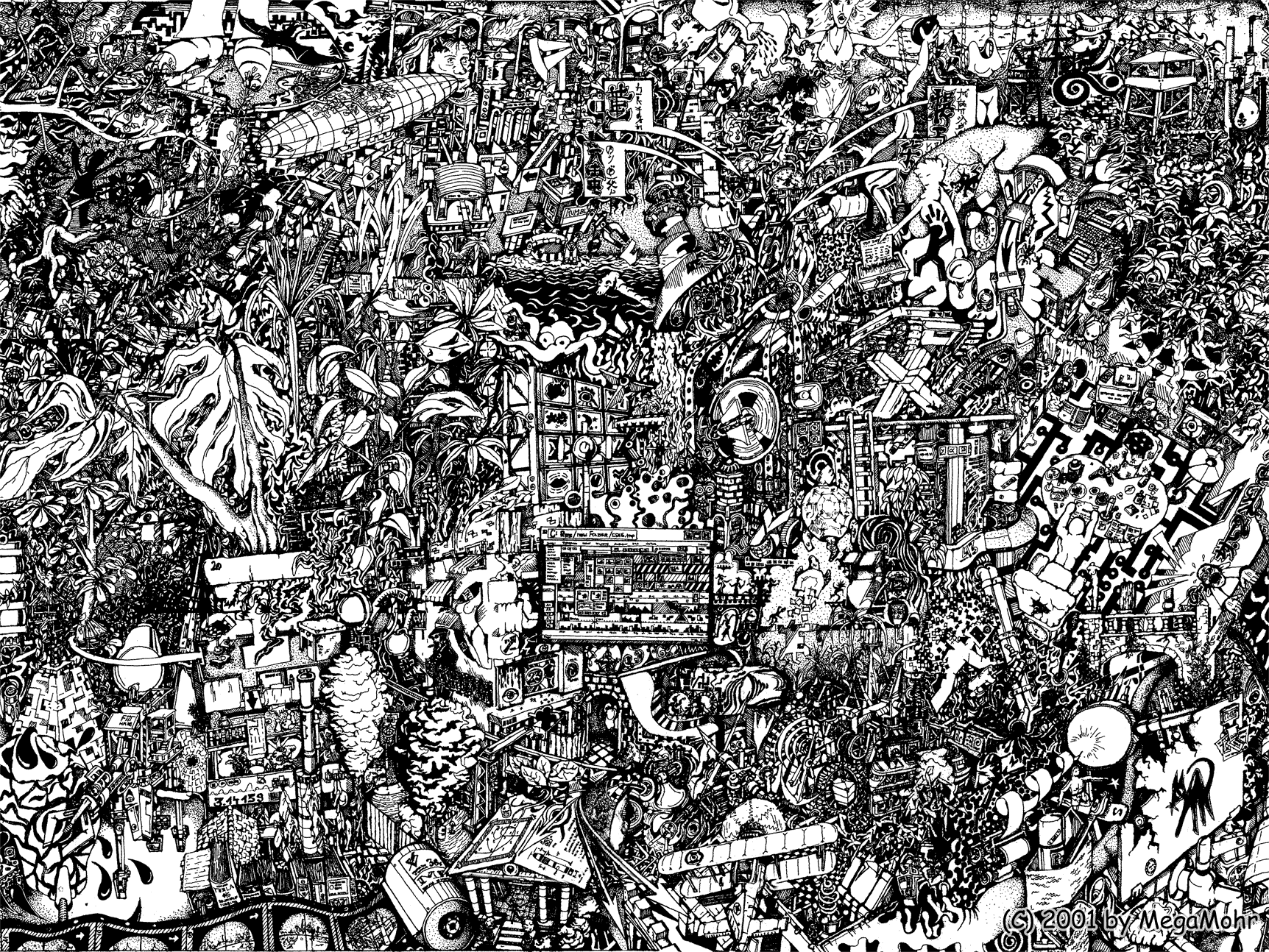
Chaos


Spent the morning with Social Security, trying to apply for medicare which I am not eligible for (though I'm going to be 65 on June 22--no gifts please).

But I need a letter of ineligibility so that I can continue my eligibility with my State of Illinois health insurance.

As they said on Game of Thrones, chaos is not a pit, chaos is a ladder.

______________________________-

The above picture is from a website called Coffee, Cats, and Autumn.

Monday, February 04, 2013

The Last Day of Life on Earth


My short short short story "The Last Day of Life on Earth" appears in the recent Atticus Review.    Take a look if you get a chance.  

It begins:

On the last day of life on earth, a little boy asked his mother for a drink of water, and she smiled and kissed him on the forehead. 

_________
 To read the rest just click here.  Here.


Thursday, November 01, 2012

Bruce Davidson

I love black and white photos.  From the time I was a kid I spent hours looking at old photos and books of photos, family photos, art photos, historical photos, street photos.

Vivian Maier, Robert Frank, Diane Arbis, Dorothea Lange, Margaret Bourke-White, Walker Evans.  And on and on.

For me, one of the great things about the internet is that I access the great photographs without having to drive over to the library and start hauling books off the shelf.  They're all right here on my computer.

Just today I was looking at some great photos.  By Bruce Davidson.  The link below is for a collection of more than 800 of his photos.  Take a look.  Here's the link to the online site where you can find them.  http://www.magnumphotos.com/C.aspx?VP3=SearchResult&ALID=2K7O3RTJ3HAC


Tuesday, October 30, 2012

Storm Update

We're doing okay here in Danville, VA.  

There was a strong wind last night that kept waking us up and making us wonder how our family and friends who were really in the path of Super Storm Sandy were doing today.


When we got up we started calling and checking on them.


Our first call was to Linda's parents.  Tony and Mabel are both 87 and living alone in Fairfield, CT, a town on Long Island Sound.  Sections of the town had a mandatory evacuation.  They didn't have electricity so we called Mabel on her cell.  At first we couldn't get through, but eventually we did.  Everything was okay.


Mabel said it was dark and wet and cold and windy.  Then she chuckled and told us she made instant coffee with tap water.  It was still warm.  Kind of.


Lillian told us that school start up here in Danville, VA, was pushed back by a couple of hours.

Linda's brother Bruce who lives in Milford, CT, within walking distance of the Sound was okay too.  He was on his way out to clean up the debris that was blowing around his yard.


I also got a note from Gregory F. Tague, a friend of mine who lives in Brooklyn, NY.


Here's what he said:


Four trees down on our block alone. One tree split in two. Trees on houses. One car totally smashed. Multiply that scenario across the city, across the tri-state area. Subways flooded. Bridges closed. Tunnels flooded. Breezy Point on fire. Lower Manhattan and Red Hook (Brooklyn) flooded. Unprecedented power outages - millions affected. A tanker ran ashore (onto a road) in Staten Island. Have never seen anything like this before.

Friday, October 26, 2012

Do We Learn Anything from History


Do we learn from history?  

As my mother would say, "That's the question."  

Maybe what history teaches us is that the only good we can ever have is that SUV, that Lexus or Infiniti.
Forget trying to change the global community. Forget trying to get justice for this schmuck or that schmuck.  Forget trying to convince some desert hooligans to appreciate the sanctity of the lives of other desert hooligans.

All there is -- all that we can hope for -- is the Amana ice-box and the Samsung combo DVD/Blu-Ray player because grace, justice, brotherhood, love, the age of aquarious, harmony and understanding are all lies.

You don’t think so?

Here's something Saul Bellow, a guy from my old neighborhood in Chicago, said:

"You think history is the history of loving hearts?  You fool!  Look at these millions of dead.  Can you pity them? Feel for them?  You can do nothing!  There were too many. We burned them to ashes, we buried them with bulldozers.  History is the history of cruelty, not love, as soft men think.  

"We have experimented with every human capacity to see which is strong and admirable and have shown that none is.  There is only practicality.  If the old God exists, he must be a murderer.  But the one true god is Death."

I’ve known big-time history professors and sociologists  who wonder about stuff like: what can we do with history and what can history teach us?  

Interesting question, but there are 7 billion other people saying, "Where can I get a good price on a Chevy?"

And why do they want to get a Chevy?  Because they know if they don't get it now before the next horde comes down from the mountains or the next ice age starts or the next natural or manmade madness starts they'll never get it, never touch something that once for a couple of minutes gave them the illusion that things were looking up.

So smile.

Friday, October 19, 2012

Autumn: Fog


In Danville we go to sleep early. 

Wake in the dark morning as the birds are thinking about doing the same. 

Each day is the same as the day before, and different. 

Today there was a fog so thick that even the birds couldn't sing through it.

___________________________

The photo is from Mimi's Toes Blog.  

Thursday, September 13, 2012

Sept. 11--Joe Calendrillo's Story

I received the following from Joe Calendrillo, Linda's cousin and the son of Michael Calendrillo who I've written about before at my Lightning and Ashes blog.

Joe read my post on "Sept. 11--The Short View" and wanted to tell me what that day meant to him.


Here's what he wrote: 

That was a day that is ingrained in my memory. Only a handful of us made it into the office that day, and when you work in Television, a "skeleton" staff on a day when the whole Nation is tuning into News coverage is not a good thing. 

We were on the air 96 hours straight with 9/11 attacks coverage, and those of us who made it into the Operations office that morning went non-stop until about 10pm that evening, when some of our overnight staff came in early to relieve us. A few of us went over to the Empire Hotel, where our Comapny had secured a few rooms for us, as the City was on lock down. Some of my co-workers just went right to their rooms and fell into bed. 

I was amazed at how eerie the City that never sleeps was that night, on Broadway no less.  It was a ghost town at 10pm. No one in the steets, no one on the roads, just emptiness. We walked the 4 blocks in silence, exhausted from the constant answering of phones in the office from co -workers, producers, directors, etc....

When we arrived at the Hotel, I had to have a drink at the bar. I walked into their big bar area, attached to a Steak house in the Hotel. There were people just sitting at the bar, staring at the big screens, who of course had the News coverage on. At least it was ABC so I felt vindicated, as if our hard work paid off!! No one uttered a word, except " Barkeep, I'll have another..." All you heard was the sound of ice clinking in a glass, or beer bottles being opened. It was surreal. I had a drink, a double actually, and a short while later, fell into bed in my room. Awoke very early the next morning, showered, and went right back to work again. 

This morning, 11 years later, I was on the express bus on the way in to work, and I thought back to that horrible day, and the weather today was EXACTLY like it was on 9/11/01. A beautiful, dry, clear day, bright blue sky. My bus drives right past the site of the old WTC and the new Freedom Tower that is almost completed, in that very same spot. 

This morning, I thought back to all the different phases I've seen that area go through the past 11 years. I said a quick prayer for all those lost on that day, at that site, as well as the others, and it made me realize how fortunate I am. Everyone knew someone who perished that day, either in the buildings, or Fire fighters who were killed trying to save them, but this City never once folded under the stress of the attacks. Maybe it's that New York "attitude" but, the City is still standing strong, somehow!! 

That next night after work, Sept 12th, I remember my sister Lisa and I taking the subway into Brooklyn, it was the only way out of Manhattan, the buses were not running, nor was the ferry, so we had to take the subway to Bay Ridge and catch a local bus to Staten Island. My Dad was at my house, with my wife and my two sons, waiting for us to arrive so he could drive Lisa home. When we walked in, there were lots of hugs, a few tears of relief, or exhaustion maybe. 

Then Dad said something I won't forget, he simply said..." People always wanted to know what War was like, well, now they know...." 

That morning of 9/11, for what it's worth, I had just gotten past the WTC buildings right before the planes hit, and was on my way uptown, not knowing anything until I got close to the office and heard people in the streets speaking about what had transpired. Sorry for the long e-mail John, it's still so fresh in my memory 11 years later.

Tuesday, September 11, 2012

September 11, 2001--The Short View


I got a letter on Sept. 12, 2001, from my friend Bill Anderson who tended to take a cynical view of people and government and the human animal in general. The following was the response I wrote to him that day:

I wish I could take the long view the way you do, Bill: look at the attack, and see it the way it probably is: Bush seeing this as his way of putting a lock on his second term, Americans showing their true nature by making money on increased gas prices, Hollywood being angry because this will put the next Bruce Willis film on hold for 2 weeks. The long view: we're all self-serving crooks.

I'm not good at the long view. I'm more of a short view guy: One of my wife Linda's cousins saw the first tower go down from her office. Her name is Lisa. She was a wonderfully fat baby. One time her mom, Linda's Aunt Anne, dressed her in a tutu, and Linda's dad Tony laughed and laughed, and still 25 years later the family talks about the tutu and how much we all loved her in her tutu and laughed with joy at her beauty.

Lisa got out okay. She was evacuated, and finally found herself across the river at a phone booth in Hoboken, New Jersey. She called home to Aunt Anne and Uncle Buddy. He’s also a short view guy: He was with Patton's soldiers when they freed the first concentration camps. He still shakes and cries when he remembers the piles of corpses.

My niece is an emergency room nurse at NYU hospital (I think I saw her in the background on an NBC spot about the hospital--but I wasn't sure. She looked old and tired and gray with pain). Her dad, Linda's brother Bruce, was calling her and calling her to make sure she was okay. Finally she got through to him late in the afternoon on Tuesday. He begged her to leave the hospital, said he would drive down from Connecticut and get her. Cried and begged her. He said he was her father and she had to listen to him. (Bruce isn't much of a crier. He's a jokey, tough Brooklyn guy.) But she was his baby and he wanted her away from all of it. And she said she couldn't leave. He cried some more and pleaded, and she hung up on him. She had to get back to work.

And all those people looking for their relatives and friends, holding pictures up to the TV cameras and telling us about how some guy was a great friend, and he was a waiter in a restaurant at the top of the building. And I see this picture of this poor foreign looking schmuck with a big nose and a dopey NY baseball cap that's way too big, who probably came here with a paper suitcase and thought that working up at that restaurant was the greatest thing possible in the world. And the friend hoping to find this guy thinks this guy is alive someplace, maybe in a coma in some hospital.

And I know there's not a chance in hell this guy or any other guy or gal in any of these pictures is alive. They're dead, all dead, but I wouldn't tell this guy holding the picture.

Boy, these are stories that touch me so hard I can't think about the other stuff, the long view.

Wednesday, August 15, 2012

Who is Ayn Rand?


There's been a lot of talk about Ayn Rand since Paul Ryan was tapped by Romney for the Vice President's slot on the GOP ticket.  

People are asking "Who's Rand"?  What's Ryan talking about her for?  How come I haven't heard about her before?

I'm not one of those people.  I know who she is.

When I was young, I read a lot of Ayn Rand.  

Her books AnthemAltas Shrugged, and Fountainhead were among the books that really inspired me, made me think about who I was.  I especially liked what she said about individualism, the importance of the self against the dominance of the "Other."  

Like most young guys back then in the 60s, I felt pretty much overwhelmed by government, the draft, my parents, school, the future with its responsibilities to a possible wife and possible kids.  

Rand seemed the ticket.  Here's what she told me:  It's you against everybody else and if you can't throw off the shackles and chains of those others you will never be free.  An attractive lesson to give to a 19 year old.  

But while trying to throw off the dominance of everybody else and to maintain the integrity of my self, I realized that I couldn't exist without other people.  There was an essential part of me that was the "Other."  What the other person did and said in part affected who I was.  It didn't control me but it was a part of me, and I felt that denying that fact was certainly a denial of my whole self.  

But what finally convinced me to turn away from Rand was her lack of charity for other people. In her world, the best thing you can do is strive to succeed for yourself.  The other person didn't need to figure into that equation.  You didn't have to care for another or concern yourself with another.  

In fact, someplace she said that if civilization is to survive, people have to reject the morality of altruism.  In other words, to hell with other people.

I couldn't accept that.  

There's a fundamental part of my self that reaches out to other people, wants to help other people.  Maybe it comes to me from people reaching out to me and my family when we first came to America.  Maybe it comes to me because my parents were victims of the kind of rejection of the humanity of others that the Nazis found comfortable.  I don't know, but what I do know is that I go emotional when I see people who need help.

Rand says, you're messing up society if you do.

Tuesday, July 24, 2012

Please Don't Shoot!


In 2011, about 8500 people were shot to death in the US. In 2010, the number according to the FBI was 8700, give or take a couple. The number has been gradually going down, but it's been as high in the last 50 years as 20,000 murders in a year.

There is apparently a type of American who likes to kill people.

I grew up in a neighborhood in Chicago where a lot of those people who like to kill people lived.  My neighborhood was called Murdertown--poeple died on the sidewalk in front of my house. There was a lot of fear there. When we could, we moved away. It was nice to be able to sit on the front porch in the new neighborhood.

As the type of American who is generally still fearful, I would like it made as difficult as possible for those other Americans to kill me or other people. You can understand my fear. It's easier to buy a gun in America than it is to get a drivers license. I just want it to be as hard to shoot someone to death as it is to drive a car.

If you know a politician, please pass my concern onto him or her.

Thank you.

Thursday, June 21, 2012

Will You Still Need me, Will You Still Read Me When I'm 64?


For three birthdays in a row (59th, 60th, 61st), I posted a birthday blog.  I enjoyed it--sharing a photo or a poem and telling what I was up to.  The 59th was all about moving to Danville and Linda and me starting our retired life here near Lillian.  The 60th was about publishing my book Lightning and Ashes and finishing my first novel.  The 61st was about Luciana's birth and what that meant to me.

I didn't write one for my 62nd birthday.  That's the year where I had my open heart surgery a few weeks before I turned 62.  I didn't feel much like writing about that birthday and what it meant to me.  I had written a lot in the previous couple of months about my heart troubles and didn't feel like writing after the surgery.  It's not hard to explain.  My mind was focused on my heart, what it had gone through, the pain I still felt, the weakness that kept me sitting in a recliner for much of each day.

On my 63rd birthday, I felt better of course, but writing about it didn't seem right.  Maybe I didn't want to press my luck, hooting about how good I felt.  Maybe I was still hearing the advice my mom gave me when I was a kid: It was bad luck to let the world know you were doing okay. Anyway, I didn't write about it, and didn't feel guilty about it, so maybe not blogging about it was the right thing.

So why am I writing now?  Telling you about my 64th birthday?

I'm not sure.  When you get to be 64, you get a little fuzzy headed.

________________________________

The above photo -- going from your right -- is of Lillian Calendrillo Guzlowski (33), Mabel Calendrillo (87), Tony Calendrillo (87), Linda Calendrillo (60), Luciana Calendrillo Guzlowski (3), and me (64).

If you want to read my previous birthday posts and see the photos, click on each of the following: 59, 60, 61.


Monday, May 21, 2012

Give Peace a Chance--it's cheaper!


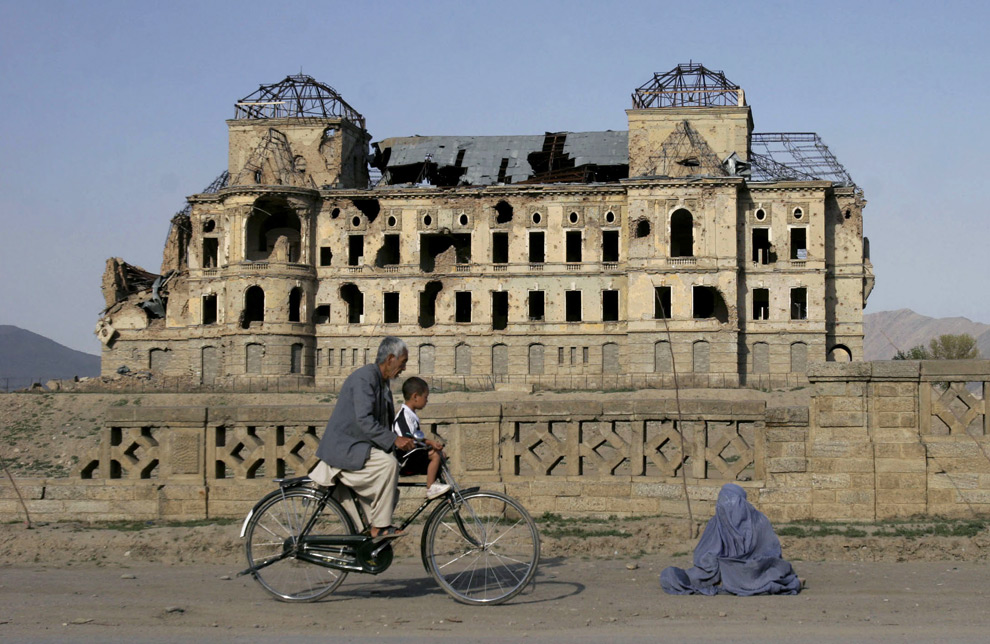
How much have we put into the war in Afghanistan?

$530212045634!

I mean I can't even read that number.

Is that 500 billion?

50 billion? 500 million?

Give me a number I can understand!

$4.99?

I can understand that number and that's what I'm willing to pay for the war.