Tuesday, October 30, 2012

Storm Update

We're doing okay here in Danville, VA.  

There was a strong wind last night that kept waking us up and making us wonder how our family and friends who were really in the path of Super Storm Sandy were doing today.


When we got up we started calling and checking on them.


Our first call was to Linda's parents.  Tony and Mabel are both 87 and living alone in Fairfield, CT, a town on Long Island Sound.  Sections of the town had a mandatory evacuation.  They didn't have electricity so we called Mabel on her cell.  At first we couldn't get through, but eventually we did.  Everything was okay.


Mabel said it was dark and wet and cold and windy.  Then she chuckled and told us she made instant coffee with tap water.  It was still warm.  Kind of.


Lillian told us that school start up here in Danville, VA, was pushed back by a couple of hours.

Linda's brother Bruce who lives in Milford, CT, within walking distance of the Sound was okay too.  He was on his way out to clean up the debris that was blowing around his yard.


I also got a note from Gregory F. Tague, a friend of mine who lives in Brooklyn, NY.


Here's what he said:


Four trees down on our block alone. One tree split in two. Trees on houses. One car totally smashed. Multiply that scenario across the city, across the tri-state area. Subways flooded. Bridges closed. Tunnels flooded. Breezy Point on fire. Lower Manhattan and Red Hook (Brooklyn) flooded. Unprecedented power outages - millions affected. A tanker ran ashore (onto a road) in Staten Island. Have never seen anything like this before.

Friday, October 26, 2012

Do We Learn Anything from History


Do we learn from history?  

As my mother would say, "That's the question."  

Maybe what history teaches us is that the only good we can ever have is that SUV, that Lexus or Infiniti.
Forget trying to change the global community. Forget trying to get justice for this schmuck or that schmuck.  Forget trying to convince some desert hooligans to appreciate the sanctity of the lives of other desert hooligans.

All there is -- all that we can hope for -- is the Amana ice-box and the Samsung combo DVD/Blu-Ray player because grace, justice, brotherhood, love, the age of aquarious, harmony and understanding are all lies.

You don’t think so?

Here's something Saul Bellow, a guy from my old neighborhood in Chicago, said:

"You think history is the history of loving hearts?  You fool!  Look at these millions of dead.  Can you pity them? Feel for them?  You can do nothing!  There were too many. We burned them to ashes, we buried them with bulldozers.  History is the history of cruelty, not love, as soft men think.  

"We have experimented with every human capacity to see which is strong and admirable and have shown that none is.  There is only practicality.  If the old God exists, he must be a murderer.  But the one true god is Death."

I’ve known big-time history professors and sociologists  who wonder about stuff like: what can we do with history and what can history teach us?  

Interesting question, but there are 7 billion other people saying, "Where can I get a good price on a Chevy?"

And why do they want to get a Chevy?  Because they know if they don't get it now before the next horde comes down from the mountains or the next ice age starts or the next natural or manmade madness starts they'll never get it, never touch something that once for a couple of minutes gave them the illusion that things were looking up.

So smile.

Friday, October 19, 2012

Autumn: Fog


In Danville we go to sleep early. 

Wake in the dark morning as the birds are thinking about doing the same. 

Each day is the same as the day before, and different. 

Today there was a fog so thick that even the birds couldn't sing through it.

___________________________

The photo is from Mimi's Toes Blog.  

Thursday, September 13, 2012

Sept. 11--Joe Calendrillo's Story

I received the following from Joe Calendrillo, Linda's cousin and the son of Michael Calendrillo who I've written about before at my Lightning and Ashes blog.

Joe read my post on "Sept. 11--The Short View" and wanted to tell me what that day meant to him.


Here's what he wrote: 

That was a day that is ingrained in my memory. Only a handful of us made it into the office that day, and when you work in Television, a "skeleton" staff on a day when the whole Nation is tuning into News coverage is not a good thing. 

We were on the air 96 hours straight with 9/11 attacks coverage, and those of us who made it into the Operations office that morning went non-stop until about 10pm that evening, when some of our overnight staff came in early to relieve us. A few of us went over to the Empire Hotel, where our Comapny had secured a few rooms for us, as the City was on lock down. Some of my co-workers just went right to their rooms and fell into bed. 

I was amazed at how eerie the City that never sleeps was that night, on Broadway no less.  It was a ghost town at 10pm. No one in the steets, no one on the roads, just emptiness. We walked the 4 blocks in silence, exhausted from the constant answering of phones in the office from co -workers, producers, directors, etc....

When we arrived at the Hotel, I had to have a drink at the bar. I walked into their big bar area, attached to a Steak house in the Hotel. There were people just sitting at the bar, staring at the big screens, who of course had the News coverage on. At least it was ABC so I felt vindicated, as if our hard work paid off!! No one uttered a word, except " Barkeep, I'll have another..." All you heard was the sound of ice clinking in a glass, or beer bottles being opened. It was surreal. I had a drink, a double actually, and a short while later, fell into bed in my room. Awoke very early the next morning, showered, and went right back to work again. 

This morning, 11 years later, I was on the express bus on the way in to work, and I thought back to that horrible day, and the weather today was EXACTLY like it was on 9/11/01. A beautiful, dry, clear day, bright blue sky. My bus drives right past the site of the old WTC and the new Freedom Tower that is almost completed, in that very same spot. 

This morning, I thought back to all the different phases I've seen that area go through the past 11 years. I said a quick prayer for all those lost on that day, at that site, as well as the others, and it made me realize how fortunate I am. Everyone knew someone who perished that day, either in the buildings, or Fire fighters who were killed trying to save them, but this City never once folded under the stress of the attacks. Maybe it's that New York "attitude" but, the City is still standing strong, somehow!! 

That next night after work, Sept 12th, I remember my sister Lisa and I taking the subway into Brooklyn, it was the only way out of Manhattan, the buses were not running, nor was the ferry, so we had to take the subway to Bay Ridge and catch a local bus to Staten Island. My Dad was at my house, with my wife and my two sons, waiting for us to arrive so he could drive Lisa home. When we walked in, there were lots of hugs, a few tears of relief, or exhaustion maybe. 

Then Dad said something I won't forget, he simply said..." People always wanted to know what War was like, well, now they know...." 

That morning of 9/11, for what it's worth, I had just gotten past the WTC buildings right before the planes hit, and was on my way uptown, not knowing anything until I got close to the office and heard people in the streets speaking about what had transpired. Sorry for the long e-mail John, it's still so fresh in my memory 11 years later.

Tuesday, September 11, 2012

September 11, 2001--The Short View


I got a letter on Sept. 12, 2001, from my friend Bill Anderson who tended to take a cynical view of people and government and the human animal in general. The following was the response I wrote to him that day:

I wish I could take the long view the way you do, Bill: look at the attack, and see it the way it probably is: Bush seeing this as his way of putting a lock on his second term, Americans showing their true nature by making money on increased gas prices, Hollywood being angry because this will put the next Bruce Willis film on hold for 2 weeks. The long view: we're all self-serving crooks.

I'm not good at the long view. I'm more of a short view guy: One of my wife Linda's cousins saw the first tower go down from her office. Her name is Lisa. She was a wonderfully fat baby. One time her mom, Linda's Aunt Anne, dressed her in a tutu, and Linda's dad Tony laughed and laughed, and still 25 years later the family talks about the tutu and how much we all loved her in her tutu and laughed with joy at her beauty.

Lisa got out okay. She was evacuated, and finally found herself across the river at a phone booth in Hoboken, New Jersey. She called home to Aunt Anne and Uncle Buddy. He’s also a short view guy: He was with Patton's soldiers when they freed the first concentration camps. He still shakes and cries when he remembers the piles of corpses.

My niece is an emergency room nurse at NYU hospital (I think I saw her in the background on an NBC spot about the hospital--but I wasn't sure. She looked old and tired and gray with pain). Her dad, Linda's brother Bruce, was calling her and calling her to make sure she was okay. Finally she got through to him late in the afternoon on Tuesday. He begged her to leave the hospital, said he would drive down from Connecticut and get her. Cried and begged her. He said he was her father and she had to listen to him. (Bruce isn't much of a crier. He's a jokey, tough Brooklyn guy.) But she was his baby and he wanted her away from all of it. And she said she couldn't leave. He cried some more and pleaded, and she hung up on him. She had to get back to work.

And all those people looking for their relatives and friends, holding pictures up to the TV cameras and telling us about how some guy was a great friend, and he was a waiter in a restaurant at the top of the building. And I see this picture of this poor foreign looking schmuck with a big nose and a dopey NY baseball cap that's way too big, who probably came here with a paper suitcase and thought that working up at that restaurant was the greatest thing possible in the world. And the friend hoping to find this guy thinks this guy is alive someplace, maybe in a coma in some hospital.

And I know there's not a chance in hell this guy or any other guy or gal in any of these pictures is alive. They're dead, all dead, but I wouldn't tell this guy holding the picture.

Boy, these are stories that touch me so hard I can't think about the other stuff, the long view.

Wednesday, August 15, 2012

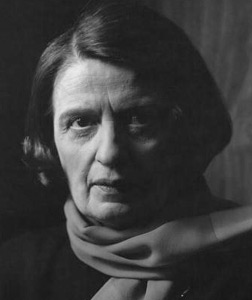
Who is Ayn Rand?


There's been a lot of talk about Ayn Rand since Paul Ryan was tapped by Romney for the Vice President's slot on the GOP ticket.  

People are asking "Who's Rand"?  What's Ryan talking about her for?  How come I haven't heard about her before?

I'm not one of those people.  I know who she is.

When I was young, I read a lot of Ayn Rand.  

Her books AnthemAltas Shrugged, and Fountainhead were among the books that really inspired me, made me think about who I was.  I especially liked what she said about individualism, the importance of the self against the dominance of the "Other."  

Like most young guys back then in the 60s, I felt pretty much overwhelmed by government, the draft, my parents, school, the future with its responsibilities to a possible wife and possible kids.  

Rand seemed the ticket.  Here's what she told me:  It's you against everybody else and if you can't throw off the shackles and chains of those others you will never be free.  An attractive lesson to give to a 19 year old.  

But while trying to throw off the dominance of everybody else and to maintain the integrity of my self, I realized that I couldn't exist without other people.  There was an essential part of me that was the "Other."  What the other person did and said in part affected who I was.  It didn't control me but it was a part of me, and I felt that denying that fact was certainly a denial of my whole self.  

But what finally convinced me to turn away from Rand was her lack of charity for other people. In her world, the best thing you can do is strive to succeed for yourself.  The other person didn't need to figure into that equation.  You didn't have to care for another or concern yourself with another.  

In fact, someplace she said that if civilization is to survive, people have to reject the morality of altruism.  In other words, to hell with other people.

I couldn't accept that.  

There's a fundamental part of my self that reaches out to other people, wants to help other people.  Maybe it comes to me from people reaching out to me and my family when we first came to America.  Maybe it comes to me because my parents were victims of the kind of rejection of the humanity of others that the Nazis found comfortable.  I don't know, but what I do know is that I go emotional when I see people who need help.

Rand says, you're messing up society if you do.

Tuesday, July 24, 2012

Please Don't Shoot!


In 2011, about 8500 people were shot to death in the US. In 2010, the number according to the FBI was 8700, give or take a couple. The number has been gradually going down, but it's been as high in the last 50 years as 20,000 murders in a year.

There is apparently a type of American who likes to kill people.

I grew up in a neighborhood in Chicago where a lot of those people who like to kill people lived.  My neighborhood was called Murdertown--poeple died on the sidewalk in front of my house. There was a lot of fear there. When we could, we moved away. It was nice to be able to sit on the front porch in the new neighborhood.

As the type of American who is generally still fearful, I would like it made as difficult as possible for those other Americans to kill me or other people. You can understand my fear. It's easier to buy a gun in America than it is to get a drivers license. I just want it to be as hard to shoot someone to death as it is to drive a car.

If you know a politician, please pass my concern onto him or her.

Thank you.

Thursday, June 21, 2012

Will You Still Need me, Will You Still Read Me When I'm 64?


For three birthdays in a row (59th, 60th, 61st), I posted a birthday blog.  I enjoyed it--sharing a photo or a poem and telling what I was up to.  The 59th was all about moving to Danville and Linda and me starting our retired life here near Lillian.  The 60th was about publishing my book Lightning and Ashes and finishing my first novel.  The 61st was about Luciana's birth and what that meant to me.

I didn't write one for my 62nd birthday.  That's the year where I had my open heart surgery a few weeks before I turned 62.  I didn't feel much like writing about that birthday and what it meant to me.  I had written a lot in the previous couple of months about my heart troubles and didn't feel like writing after the surgery.  It's not hard to explain.  My mind was focused on my heart, what it had gone through, the pain I still felt, the weakness that kept me sitting in a recliner for much of each day.

On my 63rd birthday, I felt better of course, but writing about it didn't seem right.  Maybe I didn't want to press my luck, hooting about how good I felt.  Maybe I was still hearing the advice my mom gave me when I was a kid: It was bad luck to let the world know you were doing okay. Anyway, I didn't write about it, and didn't feel guilty about it, so maybe not blogging about it was the right thing.

So why am I writing now?  Telling you about my 64th birthday?

I'm not sure.  When you get to be 64, you get a little fuzzy headed.

________________________________

The above photo -- going from your right -- is of Lillian Calendrillo Guzlowski (33), Mabel Calendrillo (87), Tony Calendrillo (87), Linda Calendrillo (60), Luciana Calendrillo Guzlowski (3), and me (64).

If you want to read my previous birthday posts and see the photos, click on each of the following: 59, 60, 61.


Monday, May 21, 2012

Give Peace a Chance--it's cheaper!


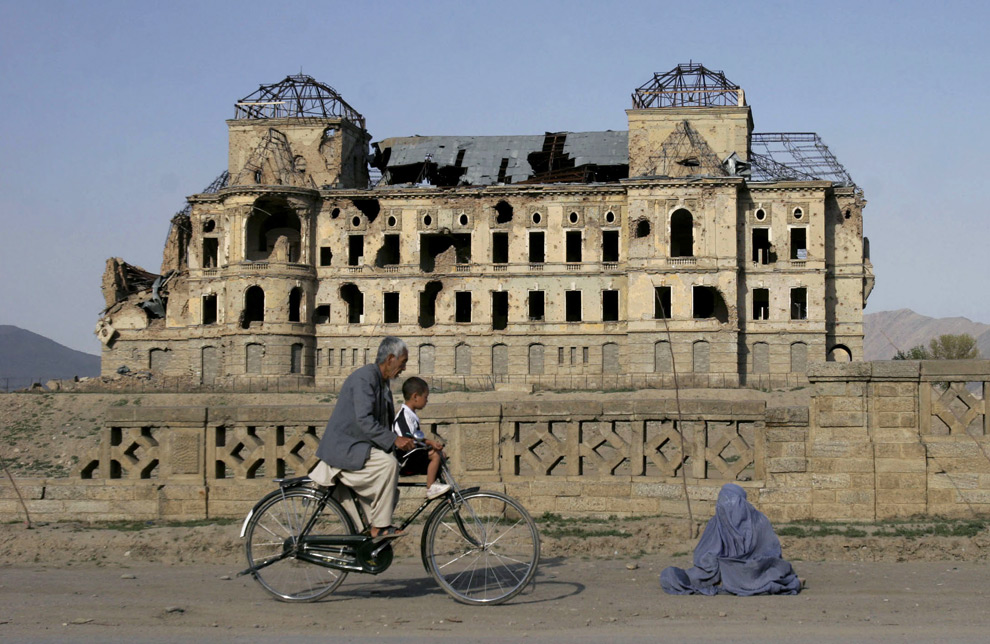
How much have we put into the war in Afghanistan?

$530212045634!

I mean I can't even read that number.

Is that 500 billion?

50 billion? 500 million?

Give me a number I can understand!

$4.99?

I can understand that number and that's what I'm willing to pay for the war.

Thursday, April 12, 2012

Some Notes on a Photo from 1968


I got a question about a photo I used in a blog I wrote a while ago, and thought I would just tell a little about it.

I'm 23 in the picture here, and it was taken in Chicago’s Grant Park.  We're all standing around waiting for an anti-war demonstration to begin and the Vietnam War to end.  While we wait for the soldiers to stop killing the Vietcong and for the Vietcong to stop killing the soldiers and for Jane Fonda to get back from Hanoi, we are trying to look cool. 

Do you see the button on my lapel?  If you could get close to it, you'd see that it says, "Share Water With Me."  It's a quote from a SF novel by Robert Heinlein called Stranger in a Strange Land, and it means I want to have a real, authentic relationship with you and every other person on the planet.  I took that kind of stuff seriously back then, and I guess I still do now, give or take a few people I know it wouldn't be a good idea to share water with.

There were a lot of these anti-war demonstrations back then.  There were so many that they now seem to blend into each other.  When I sit down and try to figure out when I started to demonstrate and when I finished, I can’t come up with any solid answers.  From about 1966 to 1975, I always seemed to be going to some demonstration on the northside or the southside of Chicago with my friend Bill Anderson.  A lot of these demonstrations seem small now, a couple hundred students, maybe a thousand, (especially after the big demonstrations that followed the Kent State Massacre when the National Guard killed four students), but they seemed big at the time and important too.  There weren't many people trying to stop the war before that.
File:Kent State massacre.jpg
Kent State University, May 4th, 1970
I know my dad wasn't one of them.  He and I would get into arguments about the war.  They were the only serious arguments that we ever had.  For the most part, my dad was pretty easy going and so was I, but we fought over the Vietnam War.  He was a Pole, a Polish patriot, who couldn't go back to Poland after the war because his homeland had been taken over by the Communists.  He was afraid that they would kill him if he went back.  So he couldn't see why I would be supporting the Communist Vietcong against the Americans.  I gave him some kind of explanation about the Vietcong being the democratically chosen representatives of the Vietnamese people.  I was doing a lot of reading about the history of the struggle and thought I had the answers.  He didn’t buy it, and it almost broke his heart to see me, his son, siding with the guys who had enslaved Poland.  It was a rocky few years for us until the war ended.

But that’s all politics and for most people politics is just old news.  Looking back at the picture now, I’m really interested in what I’m wearing.  

It may not seem like it if you’ve gotten your ideas about what people were wearing back then from Time Magazine, but I’m appropriately dressed as a hip/Vietcong 60's beat student.  Please notice that I’m wearing a Vietcong peasant hat, and that I don’t have long hair and that I’m not wearing love beads or flowers.  All that hippie stuff (hair, beads, etc.) was probably just a media concoction.  I didn’t know people who dressed that way, at least not in Chicago.   

Speaking of the way I’m dressed, the jacket I’m wearing in the picture has a history. It belonged to a dead man, a friend of my dad's who left him all his clothes.  Nice stuff, jackets, shoes, white shirts, and wool overcoats.  I wore them out over the course of the next ten years.  My wife Linda was happy to see the last of them go. Although she didn’t have to worry about the sport coat I’m wearing in the picture above.  A couple months after the picture was taken, I threw it away because somebody threw up on it.  Really.  I tried to clean it up (took it to North Avenue beach and washed it in the surf) and even doused it with perfume, but nothing helped.

I like the picture a lot because for me it does capture a moment.  Can you see the black fellow in the photo with his rooty-kazooty hat!  And the kid (Billy Martin, comic book fan) in front of me.  Cleancut as April.  Really, this is the way everybody looked in the 60's--even at an Anti-War Demonstration.  

Nobody was hip.  Everybody was hip.

___________________

You can read more about me in the 60s in a piece I posted at Open Salon called "1968: A True Confession."  Just click here.

By the way, Bill Anderson took the photo.  He was the official photographer for the  Chicago/Guzlowski/Anderson antiwar movement.  He died of cancer about seven years ago.  I miss him a lot.  May he rest in peace.

Friday, March 30, 2012

John Carter of Mars

I got an email a couple of days ago from Joe Manfredini, a boyhood friend.  He asked me if I had seen the new John Carter movie Disney just put out.  I wasn't surprised.  I'd been getting emails like this for the last couple weeks from various old friends.  People I knew back then knew that I was the number one fan of John Carter of Mars.  I remember one of them even calling me John Guzlowski of Mars.


When I was a kid, in fact, I was crazy about science fiction and fantasy writer Edgar Rice Burroughs and all of his characters, Tarzan of the Apes, David Innes of Pelucidar, Carson of Venus, and John Carter of Mars.

But especially John Carter.

John Carter (never simply John or Carter) was my absolute favorite.  I started reading about his adventures when I was about 12 and I continued reading them for the next 8 years.  I would put them down only to read other Burroughs novels (plus occasional school books) and then I would always happily return to the Mars books again and again.

What did I like about them?

As crazy as this sounds, I read them as if they were immigrant stories.  At least that's what I think now.  I was an immigrant, and I came to the US when I was a kid, encountering a strange and completely alien world.  John Carter was also an immigrant, but he was an immigrant on Mars.  While I took a troop ship from post-war Germany to the US, John Carter was mysteriously, mystically transported from a cave in the US southwest to Mars.


But we both ended up in some place weird.

Admittedly, immigrant Chicago in the early 50s wasn't Mars or, as John Carters creator Edgar Rice Burroughs calls it, Barsoom.  (Read about what immigrant Chicago was like for me by clicking here and here.

Mars was definitely weirder.

There were Green Martians: 15 feet tall, four-armed, with eyes at the sides of their heads.  They rode 8-legged Thoats, lived in primitive, nomadic tribes and were pretty much incapable of honor or love.   They were also incapable of  thinking beyond the grunt level and gave birth by laying eggs.  In fact, everybody on Mars gave birth that way.

There were also Black, White, and Red Martians.  These weren't as strange as the Green ones, but strange enough.

And John Carter was stuck among them -- with no way of getting back to Earth!

The only way Mars was at all palatable for John Carter was because of Dejah Thoris.  She was the beautiful Princess of Mars (not Green) who motivated much of his life on Mars.  A typical plot went like this: He meets her, she gets kidnapped, he saves her, she gets captured again, he saves her, she gets kidnapped again, he saves her, she gets captured again, he saves her, she gets kidnapped, he saves her, she gets captured again, he saves her, she gets kidnapped again, he saves her, she gets captured again, he saves her.  

You get the picture.

It's an immigrant's fantasy, finding that princess who belongs in the new world and hoping that she'll be your passport into the society you're isolated from.  You see this narrative play out in Emily Bronte's Wuthering Heights, Theodore Dreiser's Jennie Gerhardt, F. Scott Fitzgerald's Great Gatsby, Saul Bellow's Adventures of Augie March, and a lot of other novels.  John Carter is just another 19th-century bohunk landed in a strange country and dreaming of what he can't have.

And this dream spoke to me like nothing else I was reading at the time.  Like I said, I read these books repeatedly for almost eight years.

Go figure.

But when I recently opened the first of these novels, The Princess of Mars -- in a Kindle version -- I couldn't get past page 25.  The language, the predictability, the histrionics--it was all deadly.  I couldn't take another step into John Carter's world.

But that's not the way I felt when I was 14 and 15 and 16 reading these books like they were some bible that would open up a newer and better final world to me.

So why did I finally stop reading them?

What finally shook me lose -- as strange as this sounds -- was discovering Jack Kerouac and his Beat novels.

But that's another story.

______________________________________

If you want to read what drove me when I was a teen-ager, here's a free ebook version of The Princess of Mars.

My friend Joe Manfredini, a fellow one-time Burroughs fan, recently did a graphic review of the new Disney film John Carter.  You can read it by clicking here.


Saturday, March 24, 2012

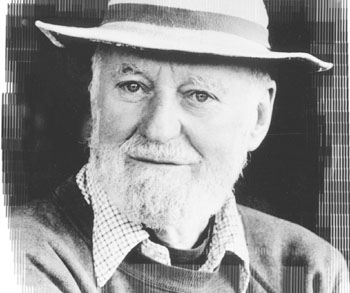
Happy 93rd Birthday, Lawrence Ferlinghetti


Lawrence Ferlinghetti is the last of the great beat writers.  Jack Kerouac is gone, Allen Ginsberg is gone, and William S. Burroughs is gone.  But Ferlinghetti is still here and his voice is clearer than ever.  Here's one of his best poems, the first one in his Coney Island of the Mind.


In Goya’s Greatest Scenes We Seem to See ...
BY LAWRENCE FERLINGHETTI
In Goya’s greatest scenes we seem to see
                                           the people of the world   
       exactly at the moment when
             they first attained the title of
                                                             ‘suffering humanity’   
          They writhe upon the page
                                        in a veritable rage
                                                                of adversity   
          Heaped up
                     groaning with babies and bayonets
                                                       under cement skies   
            in an abstract landscape of blasted trees
                  bent statues bats wings and beaks
                               slippery gibbets
                  cadavers and carnivorous cocks
            and all the final hollering monsters
                  of the
                           ‘imagination of disaster’
            they are so bloody real
                                        it is as if they really still existed

    And they do

                  Only the landscape is changed

They still are ranged along the roads   
          plagued by legionnaires
                     false windmills and demented roosters
They are the same people
                                     only further from home
      on freeways fifty lanes wide
                              on a concrete continent
                                        spaced with bland billboards   
                        illustrating imbecile illusions of happiness

                       
                        The scene shows fewer tumbrils
                                                but more strung-out citizens
                                                                     in painted cars
                               and they have strange license plates   
                           and engines
                                           that devour America

__________________________________

To read more about Ferlinghetti and visit some of his poems, check out his page at the Poetry Foundation.

Wednesday, December 21, 2011

Happy Holidays, 2011

Dear All,

It’s been a great year for Linda and me. 

In May, I passed the first anniversary of my open heart surgery, and I was happy to hear that after all the tests and consultations and examinations everything was fine.  My heart and all of its associative parts were clicking and clacking just the way they were supposed to.   This is great because we’ve been super busy this year.

A lot of our time has been spent with Lillian and Luciana, and we’ve all enjoyed watching Luciana grow and start talking more and more.  Lillian is keeping a running account on her Facebook page of the great things she and Luciana are doing.  If you aren’t a Facebook friend of Lillian’s you’re missing some wonderful stuff. 


Let me just give you one recent example.  When Lillian asked Luciana yesterday what she’s going to say to Santa when he asks her if she’s been a good girl, Luciana without hesitation said, “Ho, ho, ho.”


We’ve had two great vacations with Lillian and Luciana this year, one at Williamsburg and one Hilton Head.  The second was really super.  We spent a week there on the beach.  Luciana wasn’t sure what to make of it as first, but she soon figured it out.


Another highlight of the year was all the visitors we had in Danville.  There were visits from Linda’s parents Tony and Mabel, her sister Laura and her husband Bill, Linda’s cousin Nancy and her husband Naumann, and our nephew and niece Anthony and Kate Calendrillo and their kids Anna, David, and John.  Luciana was meeting some of them for the first time but they quickly became her favorite people.  As Christmas cards with photos come in, she loves the ones with photos of our visitors.  She’s got a terrific memory and is always pointing out her nanny and poppy, her uncles and aunts, and her cousins.


We hope this coming year we have even more guests, and I think we will.  I’ve already heard from Carol and Joe Glaser and Carol and David Stevens, telling us that they will be stopping by.

We’ve also done a lot of traveling this year, mainly cruises.  One of the highlights was the cruise Linda and her mom took to Canada in October.  They got to see whales! 


The other highlight was our Mediterranean cruise and transatlantic crossing. We both loved visiting Florence’s Uffizi museum and the volcanic mountains of Ponte Delgado in the Azores, but the absolute best was visiting Gaudi's Cathedral Sagrada Familia in Barcelona.  It fills the eye and the soul.  

I've also had the pleasure of being asked to do a number of presentations about my parents and their experiences in World War II.  I've spoken to grade school students and college students, and just people curious about what happened to Poles like my parents.  The presentation I gave at St. Francis College was filmed, and you can watch it here.


It's been a great year, and we hope that all our friends and family members find as much happiness in the coming years as we've found this last year.
______________________

Wait!  Wait!  I forgot to mention that Linda won the Danville, VA, St. Patrick's Day race in her age group!


Wednesday, November 02, 2011

Happy Pumpkin

Here are some pictures from Luciana's Halloween.


Posted by Picasa

Monday, October 31, 2011

Ode to 7 Billion Human Beings


MOVE OVER MOVE OVER MOVE OVER MOVE OVER MOVE OVER MOVE OVER MOVE OVER MOVE OVER MOVE OVER MOVE OVER MOVE OVER MOVE OVER MOVE OVER MOVE OVER MOVE OVER MOVE OVER MOVE OVER MOVE OVER MOVE OVER MOVE OVER MOVE OVER MOVE OVER MOVE OVER MOVE OVER MOVE OVER MOVE OVER MOVE OVER MOVE OVER MOVE OVER MOVE OVER MOVE OVER MOVE OVER MOVE OVER MOVE OVER MOVE OVER MOVE OVER MOVE OVER MOVE OVER MOVE OVER MOVE OVER MOVE OVER MOVE OVER MOVE OVER MOVE OVER MOVE OVER MOVE OVER MOVE OVER MOVE OVER MOVE OVER MOVE OVER MOVE OVER MOVE OVER MOVE OVER MOVE OVER MOVE OVER MOVE OVER MOVE OVER MOVE OVER MOVE OVER MOVE OVER MOVE OVER MOVE OVER MOVE OVER MOVE OVER MOVE OVER MOVE OVER MOVE OVER MOVE OVER MOVE OVER MOVE OVER MOVE OVER MOVE OVER MOVE OVER MOVE OVER MOVE OVER MOVE OVER MOVE OVER MOVE OVER MOVE OVER MOVE OVER MOVE OVER MOVE OVER MOVE OVER MOVE OVER MOVE OVER MOVE OVER MOVE OVER MOVE OVER MOVE OVER MOVE OVER MOVE OVER MOVE OVER MOVE OVER MOVE OVER MOVE OVER MOVE OVER MOVE OVER MOVE OVER MOVE OVER MOVE OVER MOVE OVER MOVE OVER MOVE OVER MOVE OVER MOVE OVER MOVE OVER MOVE OVER MOVE OVER MOVE OVER MOVE OVER MOVE OVER MOVE OVER MOVE OVER MOVE OVER MOVE OVER MOVE OVER MOVE OVER MOVE OVER MOVE OVER MOVE OVER MOVE OVER MOVE OVER MOVE OVER MOVE OVER MOVE OVER MOVE OVER MOVE OVER MOVE OVER MOVE OVER MOVE OVER MOVE OVER MOVE OVER MOVE OVER MOVE OVER MOVE OVER MOVE OVER MOVE OVER MOVE OVER MOVE OVER MOVE OVER MOVE OVER MOVE OVER MOVE OVER MOVE OVER MOVE OVER MOVE OVER MOVE OVER MOVE OVER MOVE OVER MOVE OVER MOVE OVER MOVE OVER MOVE OVER MOVE OVER MOVE OVER MOVE OVER MOVE OVER MOVE OVER MOVE OVER MOVE OVER MOVE OVER MOVE OVER MOVE OVER MOVE OVER MOVE OVER MOVE OVER MOVE OVER MOVE OVER MOVE OVER MOVE OVER MOVE OVER MOVE OVER MOVE OVER MOVE OVER MOVE OVER MOVE OVER MOVE OVER MOVE OVER MOVE OVER MOVE OVER MOVE OVER MOVE OVER MOVE OVER MOVE OVER MOVE OVER MOVE OVER MOVE OVER MOVE OVER MOVE OVER MOVE OVER MOVE OVER MOVE OVER MOVE OVER MOVE OVER MOVE OVER MOVE OVER MOVE OVER MOVE OVER MOVE OVER MOVE OVER MOVE OVER MOVE OVER MOVE OVER MOVE OVER MOVE OVER MOVE OVER MOVE OVER MOVE OVER MOVE OVER MOVE OVER MOVE OVER MOVE OVER MOVE OVER MOVE OVER MOVE OVER MOVE OVER MOVE OVER MOVE OVER MOVE OVER MOVE OVER MOVE OVER MOVE OVER MOVE OVER MOVE OVER MOVE OVER MOVE OVER MOVE OVER MOVE OVER MOVE OVER MOVE OVER MOVE OVER MOVE OVER MOVE OVER MOVE OVER MOVE OVER MOVE OVER MOVE OVER MOVE OVER MOVE OVER MOVE OVER MOVE OVER MOVE OVER MOVE OVER MOVE OVER MOVE OVER MOVE OVER MOVE OVER MOVE OVER MOVE OVER MOVE OVER MOVE OVER MOVE OVER MOVE OVER MOVE OVER MOVE OVER MOVE OVER MOVE OVER MOVE OVER MOVE OVER MOVE OVER MOVE OVER MOVE OVER MOVE OVER MOVE OVER MOVE OVER MOVE OVER MOVE OVER MOVE OVER MOVE OVER MOVE OVER MOVE OVER MOVE OVER MOVE OVER MOVE OVER MOVE OVER MOVE OVER MOVE OVER MOVE OVER MOVE OVER MOVE OVER MOVE OVER MOVE OVER MOVE OVER MOVE OVER MOVE OVER MOVE OVER MOVE OVER MOVE OVER MOVE OVER MOVE OVER MOVE OVER MOVE OVER MOVE OVER MOVE OVER MOVE OVER MOVE OVER MOVE OVER MOVE OVER MOVE OVER MOVE OVER MOVE OVER MOVE OVER MOVE OVER MOVE OVER MOVE OVER MOVE OVER MOVE OVER MOVE OVER MOVE OVER MOVE OVER MOVE OVER MOVE OVER MOVE OVER MOVE OVER MOVE OVER MOVE OVER MOVE OVER MOVE OVER MOVE OVER MOVE OVER MOVE OVER MOVE OVER MOVE OVER MOVE OVER MOVE OVER MOVE OVER MOVE OVER MOVE OVER MOVE OVER MOVE OVER MOVE OVER MOVE OVER MOVE OVER MOVE OVER MOVE OVER MOVE OVER MOVE OVER MOVE OVER MOVE OVER MOVE OVER MOVE OVER MOVE OVER MOVE OVER MOVE OVER MOVE OVER MOVE OVER MOVE OVER MOVE OVER MOVE OVER MOVE OVER MOVE OVER MOVE OVER MOVE OVER MOVE OVER MOVE OVER MOVE OVER MOVE OVER MOVE OVER MOVE OVER MOVE OVER MOVE OVER MOVE OVER MOVE OVER MOVE OVER MOVE OVER MOVE OVER MOVE OVER MOVE OVER MOVE OVER MOVE OVER MOVE OVER MOVE OVER MOVE OVER MOVE OVER MOVE OVER MOVE OVER MOVE OVER MOVE OVER MOVE OVER MOVE OVER MOVE OVER MOVE OVER MOVE OVER MOVE OVER

Excuse me, Madam, I think you're standing on my baby.

Please move over.

Wednesday, August 17, 2011

Peace


I came across a document today that I hadn't heard about. It's called the Assisi Decalogue for Peace. Back in 2002, Pope John Paul II and about 200 religious leaders got together in Assisi, Italy, to renew their efforts to promote peace. At this conference, there were Catholics and Jews and Buddhists and Mennonites and Quakers and Muslims and Zoroastrians and on and on.

After 10 days of talking and praying, they drew up a document and called it "The Assisi Decalogue for Peace." It was a 10-point program based on the conviction, as Pope John Paul II said, that "humanity must choose between love and hate."

That strikes me as a good conviction.

The document was sent to all the world's leaders. I'm not sure they all got it, but I hope they did, and I hope they read it again.

Here's "The Assisi Decalogue for Peace":

1. WE COMMIT OURSELVES to proclaiming our firm conviction that violence and terrorism are opposed to all true religious spirit and we condemn all recourse to violence and war in the name of God or religion. We undertake to do everything possible to eradicate the causes of terrorism.

2. WE COMMIT OURSELVES to educate people about respect and mutual esteem in order to achieve peaceful coexistence and solidarity among members of different ethnic groups, cultures and religions.

3. WE COMMIT OURSELVES to promote the culture of dialogue so that understanding and trust may develop among individuals and peoples as these are the conditions of authentic peace.

4. WE COMMIT OURSELVES to defend the right of all human beings to lead a dignified life, in accordance with their cultural identity, and to start their own family freely.

5. WE COMMIT OURSELVES to engage in dialogue with sincerity and patience, without considering what separates us as an insurmountable wall, on the contrary, recognizing that facing our differences can become an occasion for greater reciprocal understanding.

6. WE COMMIT OURSELVES to pardon each other's errors and prejudices of the past and present, and to support one another in the common struggle against egoism and abuses, hatred and violence, and in order to learn from the past that peace without justice is not true peace.

7. WE COMMIT OURSELVES to stand at the side of those who suffer poverty and abandonment, speaking out for those who have no voice and taking concrete action to overcome such situations, in the conviction that no one can be happy alone.
8. WE COMMIT OURSELVES to make our own the cry of those who do not surrender to violence and evil, and we wish to contribute with all our strength to give a real hope of justice and peace to the humanity of our time.

9. WE COMMIT OURSELVES to encourage all initiatives that promote friendship between peoples, in the conviction that, if a solid understanding between peoples is lacking, technological progress exposes the world to increasing dangers of destruction and death.

10. WE COMMIT OURSELVES to ask the leaders of nations to make every possible effort so as to build, at both national and international level, a world of solidarity and peace founded on justice.We, as persons of different religious traditions, will tirelessly proclaim that peace and justice are inseparable, and that peace in justice is the only path which humanity can take towards a future of hope. In a world with ever more open borders, shrinking distances and better relations as a result of a broad network of communications, we are convinced that security, freedom and peace will never be guaranteed by force but by mutual trust.

Wednesday, August 10, 2011

Philip Levine--Our New Poet Laureate


One of my favorite poets, Philip Levine, has just been made Poet Laureate of the United States. This makes me happy because I like him a lot.

When I first started reading poems, his stuck out from a lot of the other poems I was reading. They seemed to be written by guys and gals with upper-class backgrounds who went to high-class schools and seemed to write about stuff that really didn't enter into my world. We were working-class. My dad worked in a factory, and my mom cleaned offices in a skyscraper. When we got together over dinner, we didn't talk about Monet or Harvard or John Updike or Martha's Vineyard. We talked about how hot it was in the factory or about what kind of stuff the guys with Harvard educations were throwing into their office trashcans.

Philip Levine seemed to come from that world too. He was a working-class guy, and I always felt that his poems were about the world I lived in, a world of hard jobs, tough luck, dreams that kept us going, and families that fought to stay together but sometimes couldn't. I also liked his clarity. He was like all my favorite poets Whitman, Frost, Williams). He talked so that my mother and father, people with hardly any education at all, could understand.

He's written a lot of really good poems, and here are three of them that I like: "Detroit Grease Shop Poem," "The Simple Truth," and "Gospel."


Detroit Grease Shop Poem

Four bright steel crosses,
universal joints, plucked
out of the burlap sack --
"the heart of the drive train,"
the book says. Stars
on Lemon's wooden palm,
stars that must be capped,
rolled, and anointed,
that have their orders
and their commands as he
has his.

Under the blue
hesitant light another day
at Automotive
in the city of dreams.
We're all here to count
and be counted, Lemon,
Rosie, Eugene, Luis,
and me, too young to know
this is for keeps, pinning
on my apron, rolling up
my sleeves.

The roof leaks
from yesterday's rain,
the waters gather above us
waiting for one mistake.
When a drop falls on Lemon's
corded arm, he looks at it
as though it were something
rare or mysterious
like a drop of water or
a single lucid meteor
fallen slowly from
nowhere and burning on
his skin like a tear.


The Simple Truth

I bought a dollar and a half's worth of small red potatoes,
took them home, boiled them in their jackets
and ate them for dinner with a little butter and salt.
Then I walked through the dried fields
on the edge of town. In middle June the light
hung on in the dark furrows at my feet,
and in the mountain oaks overhead the birds
were gathering for the night, the jays and mockers
squawking back and forth, the finches still darting
into the dusty light. The woman who sold me
the potatoes was from Poland; she was someone
out of my childhood in a pink spangled sweater and sunglasses
praising the perfection of all her fruits and vegetables
at the road-side stand and urging me to taste
even the pale, raw sweet corn trucked all the way,
she swore, from New Jersey. "Eat, eat" she said,
"Even if you don't I'll say you did."

Some things
you know all your life. They are so simple and true
they must be said without elegance, meter and rhyme,
they must be laid on the table beside the salt shaker,
the glass of water, the absence of light gathering
in the shadows of picture frames, they must be
naked and alone, they must stand for themselves.
My friend Henri and I arrived at this together in 1965
before I went away, before he began to kill himself,
and the two of us to betray our love. Can you taste
what I'm saying? It is onions or potatoes, a pinch
of simple salt, the wealth of melting butter, it is obvious,
it stays in the back of your throat like a truth
you never uttered because the time was always wrong,
it stays there for the rest of your life, unspoken,
made of that dirt we call earth, the metal we call salt,
in a form we have no words for, and you live on it.


Gospel

The new grass rising in the hills,
the cows loitering in the morning chill,
a dozen or more old browns hidden
in the shadows of the cottonwoods
beside the streambed. I go higher
to where the road gives up and there's
only a faint path strewn with lupine
between the mountain oaks. I don't
ask myself what I'm looking for.
I didn't come for answers
to a place like this, I came to walk
on the earth, still cold, still silent.
Still ungiving, I've said to myself,
although it greets me with last year's
dead thistles and this year's
hard spines, early blooming
wild onions, the curling remains
of spider's cloth. What did I bring
to the dance? In my back pocket
a crushed letter from a woman
I've never met bearing bad news
I can do nothing about. So I wander
these woods half sightless while
a west wind picks up in the trees
clustered above. The pines make
a music like no other, rising and
falling like a distant surf at night
that calms the darkness before
first light. "Soughing" we call it, from
Old English, no less. How weightless
words are when nothing will do.


______________________________

You can find out more about Philip Levine and read some of his poems at the Poets.Org site. Just click here.

The best source for his poetry online is the Contemporary American Poetry Archive. Just click here and you will be amazed.

Wednesday, July 27, 2011

War is a Racket


A couple of weeks ago I heard about how it was costing us 20 billion dollars to aircondition Afghanistan.

That's cool.

But now I'm hearing that the wars there and in Iraq may cost as much as 5 trillion dollars.

And I'm thinking that's way too much given that we defeated the enemies in both about 8 years ago.

So why are we still fighting there? Why are our soldiers still filling those red, white, and blue coffins? And how many coffins will 5 trillion dollars buy?

Read this essay by Amy Goodman called "War is a Racket."

Here's the link: War is a Racket

One of the things that people always ask me is "What can we do in the face of so much war?"

Kurt Vonnegut said that trying to stop a war was like trying to stop a glacier. He said that and then he wrote a book that tried to stop a glacier, Slaughterhouse-Five.

It didn't stop the glacier of war, but he tried nevertheless.

It's what we all have to do.

Wednesday, July 20, 2011

Call of The Wild: Call for Submissions


My friends at Editions Bibliotekos are putting together an anthology of short fiction about our relationship to nature and they are looking for submissions. Here's there call. You can also visit their website by clicking here:

We are ready to work on another anthology, which would be our fourth. The theme is “nature’s world.” (The book’s main title will be Human / Nature). The full Call and additional Guidelines can be found by clicking on the Guidelines button at the top of this page: if you are interested in submitting, please refer to the Guidelines and Call.

The so-called nature’s world anthology will be our most challenging: there have been many such anthologies – how do we make ours different? As in the past, we rely on the creative ingenuity of our contributors: we are not looking to duplicate what has already been done regarding the natural world; we are not looking for science fiction writing; we are not looking for apocalyptic writing. As with our first three anthologies, we are concerned with the human factor. So with this anthology, what does it mean to be a human being, individually and socially, in the natural world? How does the natural world affect us – how do we shape the natural world – what are the connections and consequences? We are alive in a natural world and cannot deny that fact, and simultaneously the natural world cannot escape our touch.

As we say in the Call: There is a fine line to be drawn here: we do not need Emerson or Thoreau redux. We are not interested in so-called nature writing per se – that has been done and re-done. We are primarily interested in stories that deal with the changing climate in terms of how these changes affect people, families, communities (environmentally, ecologically, politically, historically, socially). We can imagine a story about a farmer: in Nebraska, in Vermont, in China, in South Africa. What’s happening to that farmer who sees her sheep starving, dying of thirst, or suffering from interminable illnesses? Climate is as much a metaphor as a social condition: what is the temperature in the atmosphere of our natural humanity? Some current terms that might set off ideas: Deep ecology; Evolution; Waste; Biosphere; Sustainability. We are looking for writing that goes beyond pollution reports, beyond news-writing about the ravages of mining – focus on the changing character of humankind (internally and externally) in relation to the environment.

The deadline (subject to change) is 1 September 2011, and of course, whether or not we complete an anthology on this theme depends on the quality of the material we receive. To complicate matters more: we want fiction only. Query us first: publisher@ebibliotekos.com - a few lines about you and your idea, and if we are interested, then we will ask you to send in the story.